2026 Top Yeast Peptone Types for Global Buyers

Time:2026-09-22 Author:Mason
0%

Global buyers are entering 2026 with sharper expectations for Yeast Peptone. They want consistent nitrogen, trace nutrients, clear documentation, and dependable supply. Price still matters. It is no longer the only decision.

In fermentation, small medium changes can create large production differences. A 500-gram sample may look excellent in a flask. The same product can behave differently in a 10,000-liter vessel. Foam, solubility, color, odor, and batch variation deserve close attention. These details often decide whether a material supports stable performance or creates another process problem.

Professor Arnold L. Demain, a respected authority in industrial microbiology, observed, “Microorganisms are the most versatile chemical factories on Earth.” His point remains highly relevant to Yeast Peptone selection. Microbial factories need more than a cheap nutrient source. They need a predictable environment.

This guide examines the leading Yeast Peptone types for global buyers in 2026. It compares origin, processing method, nutrient profile, application fit, quality controls, and purchasing risks. Buyers should review certificates of analysis, allergen statements, microbiological limits, and lot history. Supplier claims require verification.

There is no universal best type. That assumption is convenient. It is also incomplete. A peptone suited to vaccine research may not suit enzyme production or microbial biomass. Regional availability can change, too. Smart sourcing therefore combines technical testing with practical supply planning. The best choice is usually the one that performs consistently, communicates clearly, and remains reliable after scale-up.
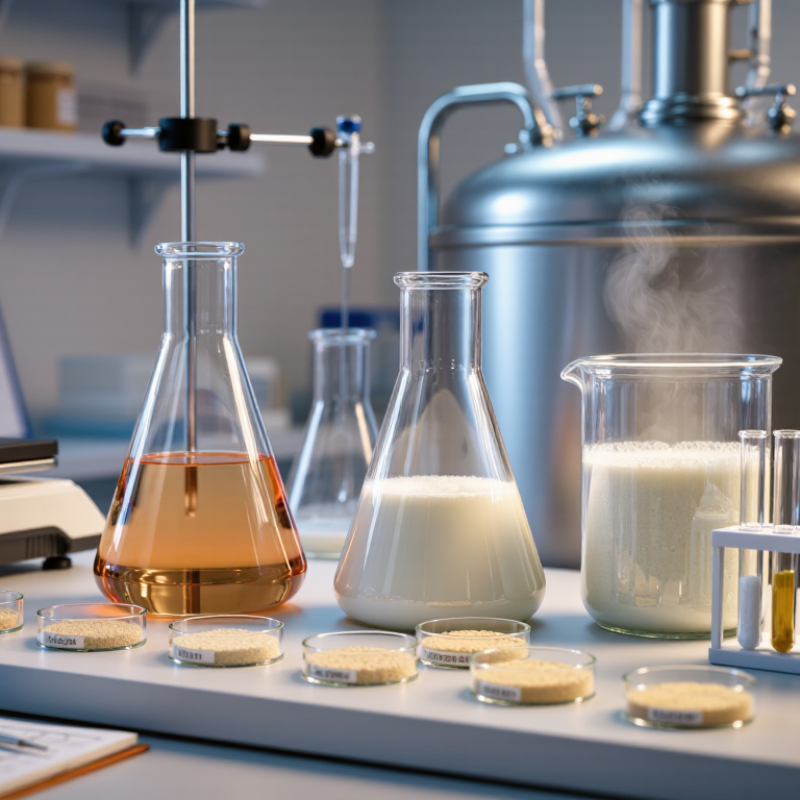
2026 Top Yeast Peptone Types for Global Buyers

What Yeast Peptone Is and Why Global Buyers Use It

Yeast peptone is a nutrient-rich powder or liquid made by enzymatically digesting yeast cells. This process releases peptides, amino acids, vitamins, minerals, and other growth-supporting compounds. It is not a single, perfectly uniform chemical. Its composition depends on the yeast source, processing method, drying conditions, and storage history.

Global buyers use yeast peptone in microbial fermentation, enzyme production, culture media, and research workflows. It supplies nitrogen in forms that many microorganisms can absorb efficiently. A well-designed formulation may produce faster growth, denser cultures, or more consistent product yields. It can also reduce dependence on animal-derived nutrients, which matters for some markets and applications. Small details matter. Solubility affects preparation time. Moisture affects shelf stability. Batch variation can influence fermentation performance.

Experienced buyers usually review the technical data sheet, certificate of analysis, microbiological limits, allergen information, and traceability records. They should also check pH, total nitrogen, amino nitrogen, ash, and solubility. These values help compare materials, but they do not predict every production result. That assumption can fail. Pilot testing remains important, especially when changing suppliers or fermentation scales. A sample may perform well in a flask yet behave differently in a large tank. Packaging, transport temperature, and local import requirements also deserve attention. Yeast peptone looks simple, but purchasing it responsibly requires both laboratory evidence and supply-chain discipline.

2026 Top Yeast Peptone Types for Global Buyers

What Yeast Peptone Is and Why Global Buyers Use It

Yeast peptone is a nitrogen-rich nutritional ingredient produced by breaking down yeast cells through autolysis or enzymatic, acid, or alkaline hydrolysis. Global buyers use it in fermentation media, microbial culture, biotechnology, food processing, and animal nutrition because it supplies peptides, amino acids, vitamins, minerals, and other growth-supporting nutrients. The chart shows indicative total nitrogen ranges commonly reported for major yeast-derived peptone formats; specifications vary according to the yeast source and production process.

The Main Types of Yeast Peptone Available in 2026

In 2026, yeast peptone is available in several practical forms. Autolyzed yeast peptone comes from controlled self-digestion of yeast cells. It usually supplies peptides, amino acids, vitamins, and soluble minerals.

Enzymatic yeast hydrolysate uses selected enzymes to release smaller nitrogen compounds. Its composition can be adjusted more consistently across production lots. Acid-hydrolyzed yeast peptone is another option. However, harsh processing may reduce some sensitive nutrients.

No type is perfect.

Yeast extract-rich peptone contains more soluble cell components and often supports rapid microbial growth. Whole-cell or lightly processed peptone can provide broader nutrition. Its particle load may complicate filtration.

Low-bioburden and low-endotoxin grades suit demanding process environments. Buyers should check nitrogen content, amino nitrogen, ash, solubility, pH, and microbial specifications.

A clean certificate helps. It cannot replace a pilot test. In one small-scale comparison, equal dosages produced different growth rates. The organisms used peptides differently.

This detail is easy to overlook.

Selection depends on the target organism, medium design, and downstream process. Enzymatic hydrolysates suit buyers seeking repeatability. Autolyzed types may offer broader nutrition at a practical cost.

Acid-treated material can fit specific formulations. It requires careful heat and pH review. Ask for batch history, not only a specification sheet.

Small differences in odor, color, or dissolution can affect handling. These factors deserve attention before global purchasing decisions.

How Yeast Peptone Types Differ in Composition and Performance

2026 Top Yeast Peptone Types for Global Buyers

How Yeast Peptone Types Differ in Composition and Performance

Yeast peptone is not a single, uniform ingredient. Its performance depends on how yeast cells are opened and hydrolyzed. Autolyzed yeast peptone usually contains peptides, amino acids, vitamins, minerals, and nucleotide fragments. Enzymatic hydrolysates often provide a more controlled peptide profile. Acid hydrolysates may deliver abundant free amino nitrogen, but heat-sensitive nutrients can decline during processing. Composition varies by raw material and manufacturing conditions.

In practical fermentation trials, peptide size can influence growth speed and final biomass. Smaller peptides are often available quickly. Larger peptides may support steadier nutrition during longer cultures. A high nitrogen value alone does not guarantee strong performance. Salt content, ash, residual glucose, and solubility can affect osmotic balance and process consistency. I have seen two samples with similar protein results behave differently in the same medium.

Buyer evaluation needs more than a specification sheet. Request amino nitrogen, total nitrogen, peptide distribution, ash, moisture, pH, and microbiological limits. Test the material in the intended medium, not only in water. Measure lag time, dissolved oxygen demand, biomass, and product yield across several lots. This takes longer.

Some early comparisons can mislead. A clear solution may not produce the best culture, while mild turbidity may reflect useful insoluble nutrients. Global buyers should also review traceability, packaging stability, and documentation under local import requirements. Consistent records matter when performance changes unexpectedly.

Key Quality Standards for Comparing Global Yeast Peptone Suppliers

Global buyers should compare yeast peptone suppliers through measurable quality standards, not price alone. A reliable specification includes total nitrogen, amino nitrogen, moisture, ash, pH, and solubility. These values influence cell growth, fermentation speed, and batch consistency. Protein content alone can mislead.

Ask for a recent certificate of analysis from the exact production lot. Check whether testing methods are clearly identified and consistently used. Microbiological limits, heavy metal controls, allergen statements, and traceability records also deserve attention.

Suppliers should explain their raw material sources, drying process, storage conditions, and shelf-life validation. In practical evaluations, I compare at least three lots under the same culture conditions.

Small differences in color or odor may reveal process variation, although they do not always predict performance.

Tips:

Request samples before signing a long-term contract. Test them in your own medium, using identical inoculum and temperature. Record biomass, pH change, foam, and final yield.

A supplier’s technical team should answer specific questions with data, not vague assurances. ISO-based quality systems can support reliability, but certification alone is not proof of application success.

I have seen a visually clean powder perform poorly after storage. That result was inconvenient, but useful. Recheck packaging, humidity exposure, and transport records before blaming the formulation.

How to Select the Right Yeast Peptone for Each Application

2026 Top Yeast Peptone Types for Global Buyers

How to Select the Right Yeast Peptone for Each Application

Selecting yeast peptone starts with the process, not the catalogue. For bacterial fermentation, choose a grade with consistent amino nitrogen, high solubility, and low batch variation. Yeast or fungal cultivation may need richer peptides and balanced vitamins. For cell culture, review osmolality, endotoxin risk, trace metals, and animal-origin documentation. Small differences can change biomass, protein yield, and filtration time.

MarketsandMarkets’ 2024 fermentation ingredients report projects this market to grow above 6% annually through 2029. That growth increases demand for traceable, scalable media components. Buyers should compare certificates of analysis, nitrogen values, ash, moisture, pH, and microbial limits across several lots. A lower price may become expensive after failed batches. It happens.

Tips: Run a side-by-side trial using your real strain and process temperature. Measure lag time, dry-cell weight, product titre, foam, and downstream clarity. Also request three consecutive lots before approval. The best-performing sample is not always the most reliable supply. For regulated production, review the supplier’s quality system and change-notification policy. A 2023 BioPlan Associates industry survey reported that manufacturing consistency remains a major concern for bioprocessing teams. Therefore, define acceptance ranges before purchasing, even if your current process seems stable.

2026 Top Yeast Peptone Types for Global Buyers - How to Select the Right Yeast Peptone for Each Application

Yeast Peptone Type Manufacturing Principle Typical Composition Profile Key Functional Characteristics Best-Fit Applications Main Selection Criteria Common Limitations Typical Form
Enzymatic Yeast Peptone Yeast biomass is hydrolyzed with proteolytic enzymes under controlled pH and temperature conditions. Soluble peptides, free amino acids, vitamins, minerals and yeast-derived growth factors.
Typical total nitrogen: approximately 8–13% on a dry basis, depending on the raw material and degree of hydrolysis.
Broad nutrient spectrum; generally good solubility; moderate-to-low variability in peptide distribution; suitable for animal-cell and microbial culture optimization. Bacterial fermentation Yeast cultivation Recombinant protein production Cell-culture media development Degree of hydrolysis, nitrogen content, solubility, osmolality contribution, endotoxin level and lot-to-lot consistency. Usually more expensive than acid hydrolysates; some grades may contribute color or nitrogen variability. Free-flowing powder or granules
Acid-Hydrolyzed Yeast Peptone Yeast proteins are hydrolyzed with mineral acid and subsequently neutralized and filtered. High proportion of small peptides and amino acids; may contain salt generated during neutralization.
Nitrogen content is commonly in the approximate range of 7–12% on a dry basis.
Rapid nitrogen availability; economical; consistent basic nutrient supply; useful where highly complex growth factors are not essential. Industrial fermentation Enzyme production Technical microbiology Low-cost media formulations Residual salt, chloride level, ash, color, amino-acid profile, pH and compatibility with the production strain. Stronger processing conditions can reduce some heat- or acid-sensitive nutrients; may have higher ash and salt levels. Powder
Autolyzed Yeast Peptone Yeast cells are allowed to self-digest through endogenous enzymes, often followed by separation and drying. Peptides, amino acids, nucleotides, B-group vitamins and minerals naturally released from yeast cells.
Composition can vary more with yeast source and autolysis conditions.
Rich and naturally complex nutrient profile; can improve biomass formation and fermentation robustness; often provides useful growth-promoting factors. Baker’s yeast propagation Starter cultures Biofertilizer fermentation Microbial biomass production Source of yeast, degree of autolysis, soluble solids, free amino nitrogen, nucleic-acid content, color and odor. Greater batch variation than highly standardized enzymatic products; may be darker and less suitable for optically sensitive processes. Powder, paste or concentrated liquid
Yeast Extract–Rich Peptone Soluble yeast components are concentrated after autolysis or enzymatic digestion, with insoluble fractions removed to increase clarity. Soluble amino acids, peptides, nucleotides, vitamins and minerals; usually lower insoluble matter than whole autolyzed yeast products. High nutritional complexity, improved clarity and strong support for fastidious microorganisms and demanding fermentation processes. Pharmaceutical fermentation Fastidious bacteria Mammalian-cell process development Diagnostic media Clarity, filtration performance, endotoxin or bioburden controls, nucleic-acid level, trace metals and documentation. Higher cost; excessive nutrient richness may complicate process control or downstream purification. Powder or concentrated liquid
Low-Endotoxin Yeast Peptone Produced with controlled raw materials, hygienic processing, clarification and validated purification or handling steps. Yeast-derived peptides and amino acids with defined microbiological and endotoxin specifications.
Nitrogen level varies by grade and is not the only quality indicator.
Designed for sensitive biological systems; supports reproducibility where endotoxin and bioburden control are important. Mammalian cell culture Vaccine-process development Gene-therapy process research Biopharmaceutical R&D Endotoxin specification, bioburden, mycoplasma controls where applicable, animal-origin-free status, traceability and regulatory documentation. More expensive; low-endotoxin status must be verified by a documented test method and lot-specific certificate. Highly soluble powder or sterile-filterable liquid
Animal-Origin-Free Yeast Peptone Manufactured exclusively from defined yeast and non-animal processing materials, with controlled supply-chain documentation. Yeast-derived peptides, amino acids, vitamins and minerals; profile depends on yeast strain, hydrolysis method and purification level. Supports processes requiring avoidance of animal-derived raw materials; can simplify raw-material risk assessment and supply-chain qualification. Cell and gene therapy research Recombinant proteins Vaccine development Regulated bioprocessing Written animal-origin-free declaration, raw-material traceability, TSE/BSE statement where relevant, consistency and regulatory support. “Animal-origin-free” does not automatically mean chemically defined, serum-free, sterile or low endotoxin; each claim requires verification. Powder or liquid concentrate
High-Protein Yeast Peptone Selected or fractionated yeast material is processed to increase protein-derived nitrogen and reduce non-nutritional solids. Higher protein and total nitrogen concentration than general-purpose yeast peptones; exact values depend on processing and analytical method. Efficient nitrogen delivery; lower addition rate may be possible; suitable for processes requiring strong biomass or product formation. High-cell-density fermentation Industrial enzymes Organic acids Amino-acid fermentation Protein and total nitrogen, free amino nitrogen, solubility, viscosity, ash, carbon-to-nitrogen balance and feed strategy. High nitrogen alone may not provide sufficient vitamins, nucleotides or trace nutrients; supplementation may be necessary. Powder or granules
Clarified and Low-Color Yeast Peptone Yeast hydrolysate is clarified, filtered and processed to reduce insoluble particles and color-forming components. Soluble peptides and amino acids with reduced turbidity and lower color intensity compared with unclarified yeast hydrolysates. Improved optical clarity; easier filtration; useful for monitoring cell density, colorimetric assays and visible product formulations. Optical-density monitoring Diagnostic microbiology Fermentation screening Clear liquid formulations Color value, turbidity, filterability, solubility, peptide profile and effect on assay background. Additional clarification can reduce some high-molecular-weight nutrients and may increase production cost. Light-colored powder or liquid
Liquid Yeast Peptone Concentrate Yeast hydrolysate is concentrated in liquid form, usually with controlled solids, pH and preservation conditions. Water-based solution containing soluble peptides, amino acids, minerals and yeast growth factors; solids content is commonly specified by the supplier. Dust-free handling; easy metering into liquid media; suitable for automated fermentation feeding and continuous manufacturing operations. Large-scale fermentation Automated media preparation Liquid feed systems Pilot plants Solids content, viscosity, microbiological stability, storage temperature, shelf life, pumpability and container compatibility. Higher shipping weight; shorter shelf life after opening; freezing or heat exposure can affect handling and stability. Liquid concentrate

Note: Composition ranges and performance characteristics are typical industry guidance rather than universal specifications. Buyers should confirm the current product specification, certificate of analysis, allergen statement, animal-origin status, microbiological limits and application-specific performance through supplier qualification and process trials.

FAQS

What is yeast peptone?

Yeast peptone is a nutrient-rich powder or liquid made by enzymatically digesting yeast cells. It contains peptides, amino acids, vitamins, and minerals. It is not perfectly uniform.

Why do fermentation producers use yeast peptone?

It provides nitrogen that many microorganisms can absorb efficiently. It may support faster growth, denser cultures, and higher product yields. Results can vary.

How do yeast peptone types differ?

Autolyzed products may contain peptides, vitamins, minerals, and nucleotide fragments. Enzymatic hydrolysates often offer a more controlled peptide profile. Acid hydrolysates may provide more free amino nitrogen, but heat-sensitive nutrients can decline.

Which specifications should buyers review?

Review total nitrogen, amino nitrogen, peptide distribution, ash, moisture, pH, and solubility. Also check microbiological limits and allergen information. Numbers alone are not enough.

How should buyers choose yeast peptone for bacterial fermentation?

Select a grade with consistent amino nitrogen, high solubility, and low batch variation. Test it with the actual strain and process temperature. A catalogue description cannot replace trials.

Is a high nitrogen value a guarantee of good performance?

No. Salt, ash, residual glucose, and solubility can change fermentation behavior. Two samples with similar protein values may produce different biomass. That assumption can fail.

How can buyers test a new yeast peptone?

Run side-by-side trials in the intended medium. Measure lag time, dry-cell weight, product titre, foam, dissolved oxygen demand, and product clarity. Use several lots.

Why do packaging and transport conditions matter?

Moisture can reduce shelf stability. Temperature changes during transport may affect material quality. Check packaging integrity when the shipment arrives.

Should buyers request multiple production lots?

Yes. Request three consecutive lots before final approval. The best sample may not represent long-term supply. Consistency matters more than one impressive result.

What common mistake should buyers avoid?

Do not judge the material only by clear dissolution in water. Mild turbidity may contain useful insoluble nutrients. A clear solution can still underperform.

Conclusion

Yeast Peptone is a nutrient-rich ingredient widely used by global buyers to support microbial growth, fermentation, enzyme production, culture media, and bioprocessing. In 2026, buyers can choose from several types, including standard yeast peptone, highly clarified grades, low-salt options, hydrolyzed forms, and application-specific formulations. These products may differ in nitrogen content, amino acid balance, mineral levels, solubility, color, moisture, and batch consistency, all of which can influence cell growth, productivity, and downstream processing.

When comparing international suppliers, buyers should review raw material traceability, manufacturing controls, microbial limits, heavy metal specifications, documentation, packaging, shelf life, and lot-to-lot quality. The best selection depends on the intended application: a general culture process may require a cost-effective standard grade, while sensitive fermentation or research workflows may benefit from a more defined, low-impurity product. Evaluating technical performance, regulatory documentation, supply reliability, and total cost together can help global buyers choose the most suitable Yeast Peptone for consistent results.

Mason

Mason

Mason is a seasoned marketing professional with a deep expertise in the company's offerings and a passion for driving brand awareness. With a strong background in digital marketing strategies, he has an innate ability to connect with diverse audiences and effectively communicate product benefits.......