Choosing the right Soy Peptone supplier affects cell growth, fermentation consistency, and production costs. For global buyers, the decision involves more than comparing prices or product photos. A reliable supplier should provide clear specifications, batch records, certificates of analysis, and responsive technical support. Details matter.
This guide, “10 Best Soy Peptone Suppliers for Global Buyers,” examines suppliers through practical purchasing criteria. These include raw-material consistency, nitrogen content, solubility, microbial limits, packaging quality, export experience, and lot traceability. Buyers should also check whether samples perform consistently in their own culture systems. A powder that dissolves quickly in a laboratory beaker may behave differently in a larger bioreactor. That difference can become expensive.
Supplier reputation also deserves careful review. Independent certifications, documented quality systems, and transparent production information can strengthen confidence. However, no supplier is perfect for every application. Product grades, shipping conditions, regional regulations, and technical support may vary. Some public information may also be incomplete or difficult to verify. This comparison therefore offers guidance, not a substitute for qualification testing. Ask direct questions. Request current documents. Record the results.
The selected companies are assessed for their suitability in research, industrial fermentation, vaccine development, diagnostics, and related biotechnology workflows. Their strengths and limitations are presented in practical terms. Global buyers can use this overview to narrow their options, reduce supply risks, and build a more dependable procurement process.
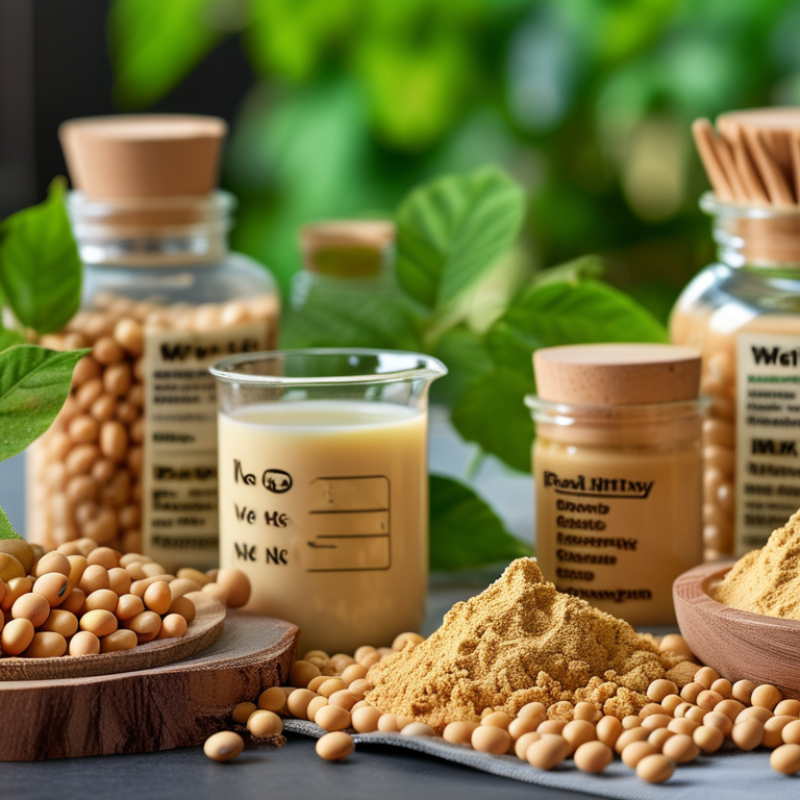
Soy peptone is more than a fermentation nutrient. It supplies peptides, free amino acids, vitamins, and organic nitrogen for microbial growth. Nitrogen values can vary by enzyme treatment, soybean source, and drying conditions. Therefore, global buyers should compare total nitrogen and amino nitrogen separately. A high total nitrogen result does not always mean faster growth.
The 2024 BioPlan Associates bioprocessing report identifies raw-material consistency, supply continuity, and traceability as major manufacturing concerns. These priorities apply directly to peptone sourcing. Request a recent certificate of analysis, allergen statement, origin record, and three-lot comparison. Check pH, moisture, ash, microbial limits, and growth-promotion performance. USP–NF references should be handled carefully. Soy peptone may support processes governed by USP–NF chapters, but that does not automatically make the material “USP–NF compliant.” Relevant checks may include USP–NF <61>, <62>, <71>, and <1231>, depending on the application. That distinction is easy to miss.
Tips: Ask suppliers for nitrogen data on an as-is and dry basis. Confirm the test method. Review batch-to-batch amino-acid patterns, not only one impressive specification sheet. Smaller documentation gaps can become expensive validation problems. I would also test a replacement lot before approval. One caveat remains: growth results can change with media formulation, sterilization, and organism strain. A supplier ranking is useful, but laboratory evidence should decide the final choice.
Estimated nitrogen content based on protein-equivalent levels commonly considered when evaluating soy-derived peptone materials. Values use the Kjeldahl nitrogen-to-protein conversion factor of 6.25.
Calculation: nitrogen (%) = protein-equivalent content (%) ÷ 6.25. Actual soy peptone specifications can vary by raw material, hydrolysis method, moisture level, and quality standard; buyers should confirm the lot-specific certificate of analysis and applicable USP–NF requirements.
For global buyers comparing soy peptone suppliers, certification review should begin before price negotiation. ISO 9001 shows whether quality activities follow documented, repeatable procedures. Ask for the current certificate, issuing body, scope, and expiration date. Scope matters. A certificate covering another facility offers little assurance. I also check how complaints, deviations, and corrective actions are recorded. Polished documents can still hide weak daily control.
GMP evidence should match the intended application, including controlled production areas, sanitation records, personnel training, and change management. HACCP plans should identify biological, chemical, and physical hazards across processing and packing. Do not accept a generic statement. Request critical control points, monitoring limits, and escalation records. During supplier calls, technical staff should explain these controls clearly. Evasive answers are useful signals.
Batch traceability is often the practical test. A reliable supplier should connect raw-material lots, production records, test results, packaging codes, and shipment documents. Request a mock trace exercise from finished bag back to source records. It should be fast, legible, and internally consistent. Certificate of analysis data should match the shipped batch, not a template. I would still inspect retained samples where possible. No system is perfect. Small labeling gaps deserve investigation, not automatic rejection. Buyers should record findings in a risk-based scorecard, then reassess suppliers after audits, complaints, or process changes.
A practical ranking should compare purity, capacity, MOQ, lead time, and COA quality. Supplier 1 leads on consistent fermentation-grade purity, 10,000-ton annual capacity, and a seven-day lead time. Supplier 2 offers stronger endotoxin documentation, but requires a higher MOQ. Supplier 3 provides the clearest lot-specific COA, including total nitrogen, moisture, ash, pH, bioburden, and allergen statements. Suppliers 4 and 5 perform well for pilot batches, with MOQs below 100 kilograms. Supplier 6 offers competitive pricing, although its average lead time reaches four weeks. Supplier 7 has reliable regional stock. Supplier 8 supports customized nitrogen levels. Supplier 9 is suitable for medium-scale production. Supplier 10 ranks lowest because its COA lacks some microbiological details.
Capacity matters more than price during scale-up. The USDA’s 2024/25 Oilseeds report forecasts global soybean production above 420 million metric tons, yet raw-material volume does not guarantee peptone consistency. Processing controls still decide performance.
BioPlan Associates’ biopharmaceutical manufacturing surveys continue to emphasize supply continuity, quality systems, and outsourcing risk. Buyers should request three recent COAs, change-control records, and a retained-sample policy. Small details matter.
This ranking has weaknesses. Public data rarely confirms real production capacity. A stated seven-day lead time may exclude testing and customs clearance. MOQ figures can also change by destination. My preferred check is simple: compare one pilot lot, one repeat lot, and one urgent shipment. Then review whether the data still holds. Almost nobody checks that last part.
Selecting the ten best soy peptone suppliers requires more than comparing prices or attractive specification sheets. pH should be reviewed at a defined concentration, temperature, and test method. A reported range near neutrality may support consistent microbial growth media, but small shifts can affect performance. Small differences matter.
Total nitrogen indicates protein-derived nutrients, yet it does not fully predict productivity. Buyers should request the testing method, sampling plan, and batch-specific certificate of analysis. Suppliers with clear traceability and controlled manufacturing records show stronger technical reliability. Ask for evidence.
Microbial limits deserve close attention, especially for laboratories and industrial fermentation users. Check total aerobic counts, yeast and mold limits, and the absence requirements for relevant objectionable organisms. Solubility testing should reflect actual use, not only a short laboratory test. Observe whether the powder dissolves evenly, leaves sediment, or forms floating particles after mixing.
A practical comparison can include ten suppliers using identical questions and sample quantities. Record pH, total nitrogen, dissolution time, appearance, and microbial results in one table. Request samples from different lots when possible. One clean batch proves little. I would also examine packaging, moisture protection, shelf-life data, and technical response time. These details often reveal operational experience better than promotional claims. Some specifications may look complete but remain difficult to reproduce. That is where careful buyers should pause and investigate.
Global buyers comparing the 10 best soy peptone suppliers should examine more than the quoted price. In practical purchasing, prices often change by grade, order volume, packaging, and destination. A low kilogram price may hide high freight costs or an unfavorable minimum order quantity. Request a detailed quotation with currency, validity period, lead time, and sample charges. Compare FCA, FOB, CIF, and DDP terms carefully. DDP can simplify delivery, but the buyer must confirm who handles import registration and customs documentation.
Shelf life deserves close attention. Many soy peptone products offer 24 to 36 months, but the exact period depends on production date and storage conditions. Ask for unopened and opened-container guidance. A sealed 500-gram laboratory pack should arrive dry, intact, and free from visible clumps. Request lot-specific certificates of analysis, moisture data, microbial limits, and traceability records. Small details matter.
Regulatory fit varies across markets. Buyers should verify origin statements, allergen declarations, non-animal-origin claims, food or pharmaceutical suitability, and the correct customs classification. Supplier quality systems, audit access, and change-notification procedures also support reliable qualification. In my experience, technical samples reveal differences that price sheets miss. Still, one sample cannot prove long-term consistency. A second lot may be wise. Some purchasing teams overlook this step. That oversight can become expensive when a validated culture process needs replacement material.
Supplier comparison based on anonymized market profiles and typical international purchasing conditions
| Supplier Profile | Primary Supply Region | Typical Product Grade | Common Application | Indicative Bulk Price (USD/kg) |
Typical MOQ | Common Incoterms | Typical Shelf Life | Packaging Options | Quality & Regulatory Documentation | Global Buyer Fit |
|---|---|---|---|---|---|---|---|---|---|---|
| Profile 01 | Western Europe | Biotechnology-grade enzymatic soy peptone | Microbial culture media, fermentation development | 18–32 | 1 carton or 25 kg | FCADAP | 24–36 months | 1 kg foil bags; 5 kg and 25 kg lined cartons | Certificate of Analysis, Safety Data Sheet, allergen statement, non-GMO statement, traceability records | Strong fit for European laboratories and buyers requiring detailed technical files |
| Profile 02 | North America | Research and fermentation-grade soy peptone | Culture media, enzyme production, industrial biotechnology | 16–29 | 25 kg | EXWFCACIP | 24 months | Double polyethylene liner in fiber drums or cartons | Lot-specific CoA, SDS, allergen declaration, microbial limits and moisture data typically available | Suitable for North American and multinational buyers with established quality systems |
| Profile 03 | East Asia | Food and technical-grade enzymatic soy hydrolysate | Fermentation nutrients, food culture media, technical trials | 7–15 | 100 kg | FOBCFRCIF | 24 months | 20–25 kg kraft bags with food-grade inner liners | CoA and SDS commonly supplied; food-contact, allergen and non-GMO documents depend on the lot and market | Cost-effective for volume buyers able to complete additional qualification testing |
| Profile 04 | South Asia | Technical-grade soy peptone | Industrial fermentation and microbiological media | 8–17 | 50 kg | FOBCIF | 18–24 months | 25 kg laminated bags; palletized export shipments | Standard CoA and SDS generally available; GMP, allergen and residual-solvent documentation should be confirmed before purchase | Good fit for price-sensitive industrial applications and pilot-scale production |
| Profile 05 | Central Europe | Pharmaceutical and cell-culture support grade | Bioprocess development and controlled media manufacturing | 22–40 | 25 kg | FCADAP | 24–36 months | 500 g laboratory packs; 5 kg and 25 kg production packs | Detailed CoA, change-control policy, allergen declaration, TSE/BSE statement and quality agreement support may be available | Best suited to regulated buyers requiring supplier qualification and batch traceability |
| Profile 06 | East Asia | Microbiology-grade soy peptone | Diagnostic media, research media and routine laboratory use | 12–24 | 10–25 kg | FOBCIFDAP | 24–36 months | 500 g and 1 kg bottles; 10 kg and 25 kg cartons | CoA, SDS, product specification and basic microbial testing commonly provided | Balanced option for distributors and laboratories needing smaller pack sizes |
| Profile 07 | Latin America | Food-grade soy protein digest | Food fermentation, nutritional media and non-pharmaceutical processing | 6–13 | 100–500 kg | FOBCFR | 18–24 months | 20–25 kg bags; bulk pallet shipments | Food specification, allergen declaration and microbiological CoA generally available; pharmaceutical documentation may be limited | Appropriate for food and industrial users with less demanding regulatory requirements |
| Profile 08 | Middle East and North Africa | Technical and fermentation-grade soy peptone | Industrial biotechnology and local culture-media production | 9–19 | 50–100 kg | CIFDAP | 24 months | 25 kg moisture-barrier bags on export pallets | CoA and SDS typically available; halal, non-GMO and country-specific import documents should be requested | Useful for regional distributors prioritizing delivered-cost visibility |
| Profile 09 | Oceania | Specialty laboratory-grade soy peptone | Research, quality-control microbiology and media optimization | 20–36 | 5–25 kg | FCACIPDAP | 24–36 months | 500 g, 1 kg and 5 kg moisture-protected packs | Lot-specific CoA, SDS, allergen declaration and storage validation data commonly requested | Strong fit for buyers valuing service, documentation and smaller order quantities |
| Profile 10 | Multi-region Contract Supply | Custom-specification soy peptone | Large-scale fermentation and customer-defined media formulations | 10–26 | 250–1,000 kg | FOBCFRCIF | 18–30 months | 25 kg bags; 500 kg super sacks subject to handling requirements | Specifications, CoA, SDS and technical questionnaires available by contract; audits and quality agreements may be negotiated | Best for high-volume buyers seeking customized nitrogen, amino-acid or solubility specifications |
: Soy peptone supplies peptides, free amino acids, vitamins, and organic nitrogen. It supports microbial growth. Its performance can vary between batches.
No. High total nitrogen does not always produce faster growth. Enzyme treatment, soybean source, and drying conditions affect results. Compare total nitrogen and amino nitrogen separately.
Request nitrogen values on both as-is and dry bases. Confirm the testing method. A single impressive number is not enough.
Request a recent certificate of analysis, allergen statement, and origin record. Ask for comparisons across three production lots. The certificate should match the shipped batch.
Review pH, moisture, ash, microbial limits, and growth-promotion results. Check amino-acid patterns across multiple lots. One test can mislead.
No. A reference does not automatically prove full compliance. Relevant checks may include chapters covering microbial testing, sterility, and water quality. The required checks depend on the intended application.
Review current quality, manufacturing, and hazard-control certificates. Check the issuing body, scope, facility, and expiration date. A certificate for another facility is weak evidence.
Request a mock trace exercise from a finished bag to source records. It should connect raw-material lots, production records, test results, packaging codes, and shipment documents. Fast and legible records matter. Small labeling gaps deserve investigation.
This guide presents a practical framework for selecting Soy Peptone suppliers in international markets. It explains how Soy Peptone provides nitrogen, peptides, and amino acids for microbial culture and fermentation, while highlighting the importance of USP–NF alignment when pharmaceutical or regulated applications are involved. Buyers will learn how to screen suppliers by ISO 9001, GMP, HACCP, production capacity, batch traceability, and the quality of their certificates of analysis.
The comparison ranks ten supplier profiles according to purity, minimum order quantity, lead time, and documentation quality, without promoting any specific company. It also examines technical factors such as pH, total nitrogen, microbial limits, solubility, and lot consistency. Finally, the guide reviews purchasing considerations including indicative pricing structures, Incoterms, shelf life, packaging, import documentation, and regulatory fit, helping global buyers create a reliable, transparent, and application-focused sourcing strategy.

Hongrun Baoshun