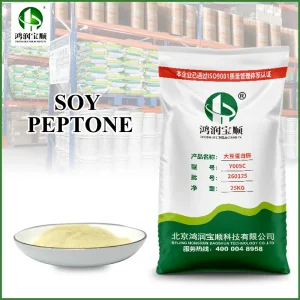
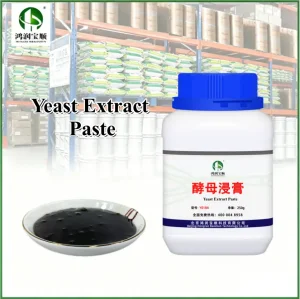
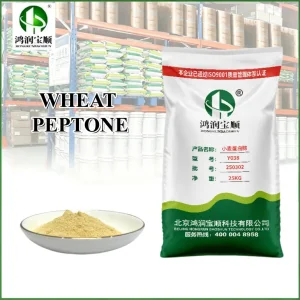
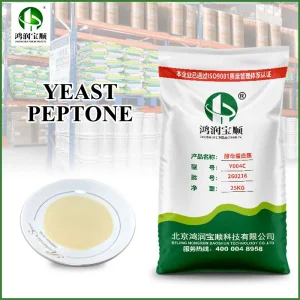
Hongrun Baoshun
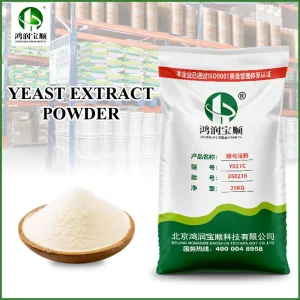
1. The Strategic Role of Buffered Yeast Extract Broth in Industrial Bioprocesses
In modern biotechnology, fermentation efficiency rests heavily on the nutritional and physical stability of the culture medium. Yeast extract stands as a paramount source of organic nitrogen, B-complex vitamins, amino acids, and vital nucleotides. However, during rapid microbial catabolism, the accumulation of acidic or basic metabolites often induces severe pH fluctuations. Uncontrolled pH shifts deteriorate cell viability, inhibit enzyme function, and down-regulate overall yield.
Buffered Yeast Extract Broth solves this challenge by incorporating a chemically balanced buffer system (typically potassium or sodium phosphates) directly into the nutrient-dense autolyzed yeast profile. This integration maintains a constant, physiological pH range (typically 6.8 to 7.2) throughout the log growth phase. For pharmaceutical, probiotic, and industrial enzyme manufacturing, this buffering capability minimizes chemical dosing intervals (e.g., ammonia or sodium hydroxide addition), reducing chemical stress on the micro-organisms and lowering osmotic pressure in the bioreactor.
2. Global Macro Market Trends & Transition to Animal-Free Media
Globally, the bioprocessing sector is undergoing a massive shift towards animal-free, chemically defined, or highly consistent complex plant/yeast-based media. Regulators such as the FDA and EMA have established stringent guidelines concerning Transmissible Spongiform Encephalopathies (TSE/BSE) associated with animal-derived inputs. Consequently, yeast extract and plant peptones (such as soy and wheat) have transitioned from alternative ingredients to main-tier biopharmaceutical staples.
From a commercial perspective, supply chains are demanding greater resilience. With global capacity limitations and rising shipping costs, securing a direct partnership with large-scale factories in China—which combine rich raw material access with advanced enzyme digestion technologies—offers a strong competitive advantage. China-based manufacturing hubs like Beijing Hongrun Baoshun Technology Co., Ltd. provide global players with the high-capacity, cost-effective solutions necessary to remain competitive in industrial-scale bio-manufacturing.
3. Comparative Chemical and Nutritional Profile
Below is a comparative breakdown of key organic nitrogen sources utilized in industrial microbiology, outlining where Buffered Yeast Extract Broth stands in comparison with animal-derived and unbuffered counterparts.
| Nutrient / Parameter | Buffered Yeast Extract Broth | Standard Yeast Extract | Tryptone (Casein Digest) | Beef Peptone |
|---|---|---|---|---|
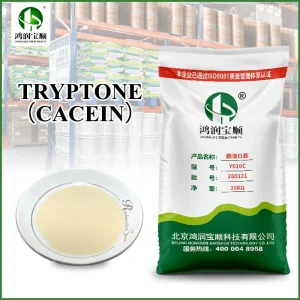
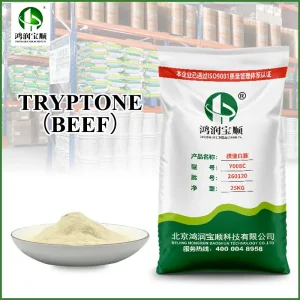
| Total Nitrogen (TN) | ≥ 10.0% | ≥ 11.5% | ≥ 12.0% | ≥ 11.0% |
| Amino Nitrogen (AN) | ≥ 4.5% | ≥ 5.0% | ≥ 3.5% | ≥ 3.0% |
| pH Buffer System | Phosphate Buffered (6.8 ± 0.2) | Unbuffered (Variable) | Unbuffered (Variable) | Unbuffered (Variable) |
| B-Complex Vitamins | High (Rich in Thiamine/Riboflavin) | High | Trace | Low |
| BSE/TSE Safety Risk | Zero (Animal-Free) | Zero (Animal-Free) | Low (Dairy Derived) | High (Bovine Source) |
4. Manufacturing and Process Technology
The manufacturing process at Beijing Hongrun Baoshun Technology Co., Ltd. leverages state-of-the-art autolysis and enzymatic hydrolysis technology. Raw *Saccharomyces cerevisiae* cells are subjected to controlled heat and specific food-grade enzymes to break down the yeast cell walls. This releases intercellular proteins, vitamins, and nucleic acids without damaging essential micro-nutrients.
Following autolysis, the soluble fraction is separated, concentrated under vacuum, and spray-dried. The buffering salts are dry-blended using precision industrial mixers to ensure absolute homogeneity across batches. This process prevents localized salt concentrations that could inhibit bacterial growth, ensuring consistent performance in both laboratory diagnostic plates and 100,000-liter industrial fermenters.
5. Strategic Strengths & Operational Capacity
Scale & Distribution Power
Establishing Sichuan factories in the Qili Industrial Park (Phase I & II) totaling over 40,000 m² of state-of-the-art facility space alongside 20,000 m² of dedicated storage capacity.
Dual Line Isolation
Complete separation of animal-derived and plant-derived production lines. This prevents cross-contamination, ensuring absolute purity for vegan or strictly non-animal bio-manufacturing workflows.
Global Regulatory Assurances
Strict compliance verified through ISO 9001:2015 Quality Management Systems and MUI Halal certification, permitting smooth integration into food, pharma, and global diagnostic applications.
Empirical Customization
Ability to tailor the free amino nitrogen (FAN) content, molecular weight distribution of peptides, and buffer capacities to meet the growth dynamics of specific microbial strains.
6. Strategic Localized Application Scenarios
Our raw materials are heavily optimized for localized downstream applications, serving various critical areas:
- Culture Media Formulation: Formulating dehydrated media, plating media, and diagnostics where background color, clarity, and stable pH parameters are critical to accurate microbial enumeration.
- Biomedical Applications: Serving as the key organic nitrogen source for recombinant protein production, vaccine cultivation, and monoclonal antibody workflows.
- Biochemical Engineering: Broadly utilized in amino acid production, secondary metabolite biosynthesis, and industrial enzyme manufacturing.
- Probiotics & Microecological Preparations: Accelerating the growth of fastidious lactic acid bacteria (e.g., Lactobacillus, Bifidobacterium) which require high concentrations of free amino acids and peptides.
- Biological Agriculture: Providing cost-efficient and high-nitrogen biological inputs for bio-pesticides and bio-fertilizers.
7. Technical Roadmap and Future Outlook (2026-2030)
To support next-generation synthetic biology, Hongrun Baoshun's R&D team is developing automated precision hydrolysis technology. This tech uses AI algorithms to control protease addition and temperature profiles in real-time, resulting in customizable peptide molecular weight distributions. Additionally, our factories are upgrading to sustainable, zero-carbon manufacturing pathways, utilizing clean energy sources in our Sichuan production base to support the global green transition of biological industries.