In global animal nutrition and biotechnology, the demand for stable, high-grade protein sources is escalating. Standard soybean meal has long served as the baseline of livestock diets. However, modern animal husbandry—particularly high-density aquaculture and early-weaned piglet operations—requires feed inputs with minimized anti-nutritional factors (ANFs), superior digestible profiles, and enhanced bioavailability. Beijing Hongrun Baoshun Technology Co., Ltd. (established in 2008) addresses this industrial challenge by converting raw agricultural commodities into refined, biotech-grade nitrogen sources and specialty fermented feed proteins.
Operating in the China (Beijing) Pilot Free Trade Zone Science and Technology Innovation Area, our organization has transitioned from a localized developer into a dual-certified national "High-tech Enterprise" and "Zhongguancun High-tech Enterprise". By leveraging bio-enzymatic cleavage and microbial fermentation, we provide the global agricultural sector with structured raw materials that bypass conventional gastrointestinal barriers in targeted livestock.
In 2018, Hongrun Baoshun upgraded its infrastructure by expanding to the Qili Industrial Park in Langzhong, Sichuan. This specialized facility encompasses a combined Phase I & Phase II floor area exceeding 40,000 square meters, backed by 20,000 square meters of controlled-atmosphere storage.
With over 100 dedicated technical professionals operating fully segregated animal-derived and plant-derived production lines, we ensure zero cross-contamination. Our production capability encompasses customized batches of organic peptones, yeast extracts, and highly digestible fermented plant proteins.
The international animal feed market is shifting away from unprocessed plant proteins. Industrial feed formulators encounter strict limits when formulating diets using standard soybean meal (SBM). The presence of endogenous anti-nutritional factors (ANFs) such as trypsin inhibitors, beta-conglycinin, glycinin, lectins, and oligosaccharides (raffinose and stachyose) induces enteropathy, limits protein assimilation, and triggers systemic immune responses in young animals.
By addressing these limitations at the source, China-based manufacturers are reforming international procurement pipelines. Global buyers look for factories that can provide pre-digested peptide structures with optimized molecular weights. Through targeted fermentation, the molecular weight of proteins is shifted below 1,000 Daltons. At this size, peptides are absorbed directly via the peptide transporter 1 (PepT1) pathway in the intestinal brush border membrane. This physiological advantage reduces feed conversion ratios (FCR) and decreases mortality rates in high-value aquaculture, piglet post-weaning, and poultry starter feeds.
| Nutrient Parameter | Standard Soybean Meal (SBM) | Fermented Soybean Meal (FSBM) | Biotech/Physiological Benefit |
|---|---|---|---|
| Crude Protein Content | 43% - 48% | 50% - 56% | Higher nutrient density, reduced bulk volume. |
| Trypsin Inhibitors (mg/g) | 3.5 - 6.0 | < 0.5 | Removes digestive inhibition; enhances endogenous enzyme action. |
| Glycinin & β-Conglycinin | Highly antigenic | Degraded > 90% | Prevents intestinal hypersensitivity & diarrhea in young animals. |
| Oligosaccharides (Raffinose) | 5.0% - 7.0% | < 0.8% | Reduces flatulence, osmotic diarrhea, and wet litter issues. |
| Peptide Size Distribution | Mostly > 30 kDa macromolecular | Over 75% < 3 kDa (Bioactive peptides) | Rapid mucosal absorption bypassing intact protein digestion. |
A reliable supply chain is essential for global buyers. Beijing Hongrun Baoshun Technology Co., Ltd. operates with a modern, system-driven infrastructure designed to maintain continuous production. Our Langzhong factory is engineered to meet complex industrial volumes with stable output parameters.
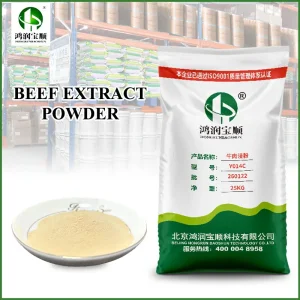
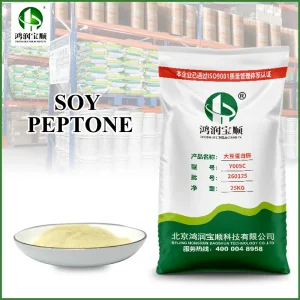
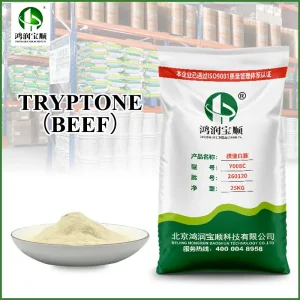
To meet global biosecurity standards, we maintain separate production lines for animal-derived products (such as beef extract and beef peptones) and plant-derived products (such as soy peptone and wheat peptone). This layout prevents cross-contamination and ensures Halal compliance.
We offer custom manufacturing for various requirements, including adjustability in amino nitrogen ratios, molecular weight profiles, and physical forms (granules, pastes, or spray-dried powders). This helps biotech and feed partners optimize their specific formulations.
Our raw materials are processed through a structured supply chain. By managing our sourcing and maintaining large storage facilities, we support stable pricing and reliable delivery schedules for long-term contract partners.
Processing soybean meal into high-purity protein products involves structured biochemical steps. Our manufacturing line uses controlled solid-state fermentation (SSF) and liquid enzymolysis to break down complex molecules into bioavailable nutrients.
Raw, non-GMO soybean meal is prepared and inoculated with selected microbial strains, including Lactobacillus acidophilus and Bacillus subtilis. These micro-organisms produce organic acids and proteases that initiate the degradation of plant cell walls and complex proteins.
We introduce food-grade endopeptidases and exopeptidases under controlled temperature and pH conditions. This step breaks down large peptide chains into small-chain peptides, peptones, and free amino acids, while reducing anti-nutritional antigens.
The hydrolyzed protein liquid undergoes multi-stage filtration to remove insoluble fibers. It is then concentrated in vacuum evaporators and dried through high-temperature spray towers. This process yields a highly soluble, moisture-controlled powder.
Hongrun Baoshun operates under structured quality management systems. Our facilities are certified to ISO 9001:2015 standards, and we enforce a strict policy where no batch leaves the factory without passing quality control inspections.
For partners requiring compliance for specialized formulations, our plants maintain MUI Halal certification. We provide complete batch traceability, heavy metal assays, microbiological screening, and raw material certificates with every shipment.
To help clients verify performance before purchasing, we offer free samples of up to 500 grams per product (excluding shipping fees). This allows laboratories and formulators to test solubility, nitrogen content, and compatibility prior to committing to bulk volumes.
Standard soybean meal contains anti-nutritional factors (ANFs) like glycinin, stachyose, and trypsin inhibitors that restrict digestion in young animals. Fermented soybean meal undergoes microbial conversion, breaking down these complex proteins into highly digestible peptides (mostly under 3,000 Daltons) and reducing ANFs by over 90%.
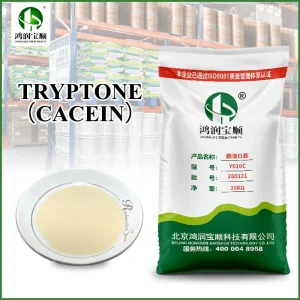
Yes. Soy peptone is a high-quality plant-derived nitrogen source that can replace animal peptones like beef or casein peptone in many applications. It helps developers avoid BSE/TSE risks, meet Halal or Kosher requirements, and create animal-free culture media.
We operate fully separated plant-source and animal-source production lines at our 40,000 square meter factory in Langzhong, Sichuan. This separation is backed by dedicated HVAC and material-handling systems to ensure product integrity and compliance with Halal standards.
Our facilities are certified to ISO 9001:2015 quality management standards and hold MUI Halal certification. We also comply with national high-tech enterprise production codes, ensuring consistent quality and standard-compliant manufacturing.
Yes, we provide free product samples of up to 500 grams for quality evaluation and pilot testing. Customers only need to cover the shipping cost. Please contact our team to arrange sample shipments.
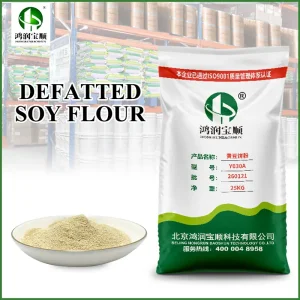
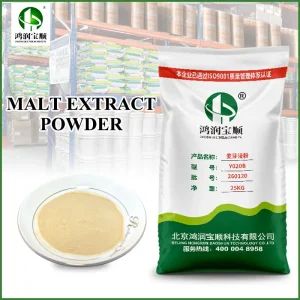
Our standard packaging includes double-layered moisture-proof bags of 25kg. For bulk industrial purchases, we can supply 500kg or 1,000kg jumbo bags, as well as customized packaging designs to match your storage and material handling requirements.
 Hongrun Baoshun