Advanced media substrates and nitrogen-rich components manufactured under strict ISO and Halal regulations to optimize yield, growth rates, and purity of culture runs.
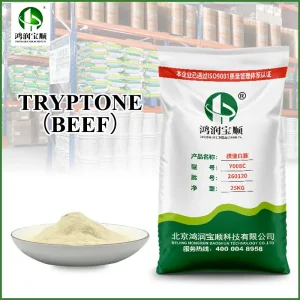
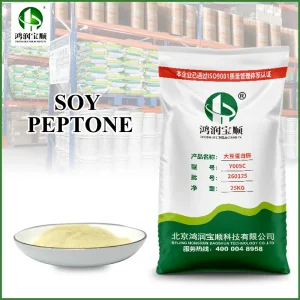
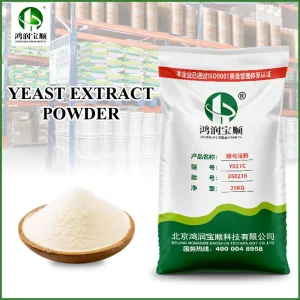
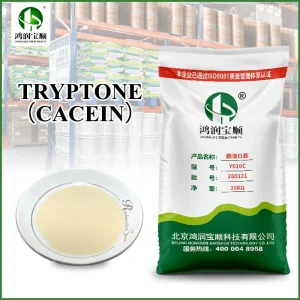
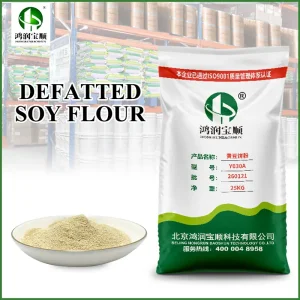
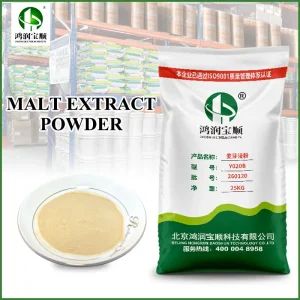
Beijing Hongrun Baoshun Technology Co., Ltd. was established in 2008 and is rooted in the China (Beijing) Pilot Free Trade Zone Science and Technology Innovation Area. Through persistent technical research and manufacturing refinement, the corporation has evolved into a modern high-tech enterprise integrating biotechnology research and development, large-scale production, and global commercial trade.
Leveraging dual certifications as a national "High-tech Enterprise" and a "Zhongguancun High-tech Enterprise," Hongrun Baoshun has built a solid infrastructure designed to supply consistent, high-yield biological ingredients to major industrial fermentation plants, pharmaceutical laboratories, and agricultural production networks around the world.

Through our five integrated corporate subsidiaries, we build a seamless value chain spanning bio-resource research, quality assurance, logistics, and localized customization services.
Focuses on core biomedical research and pioneering development of complex nutrient matrices tailored for modern cell culture and biopharma applications.
Operates large-scale industrial enzymatic reactors and plant/animal protein isolation systems inside our primary industrial manufacturing base.
Pioneers analytical validation procedures, ensuring strict quality control audits, raw material traceability, and compliance benchmarks.
Leads technical integration, automation, and environmental controls for aerobic fermentation plants, minimizing carbon footprint and optimizing yield.
Spearheads global export logistics, customized packaging networks, and local customer success teams across North America, Europe, and Asia.
We provide a reliable, long-term supply of premium biological substrates backed by independent manufacturing lines and strict batch validation.
We supply high-grade animal, plant-derived, and yeast-derived raw materials to satisfy diverse growth requirements.
Our separate animal and plant production lines ensure zero cross-contamination and continuous annual capacity.
Operating under ISO 9001:2015 standards, we enforce a strict policy where "no substandard product leaves our factory."
Evaluate our product compatibility with your cell lines. We offer up to 500g of free product samples (excl. shipping).
An in-depth look at technological advancements, regulatory environments, and sourcing considerations driving the future of industrial biotechnology.
Aerobic fermentation is the cornerstone of modern industrial biotechnology, playing a pivotal role in the production of therapeutic proteins, antibiotics, organic acids, industrial enzymes, and biopesticides. Over the past decade, the industry has transitioned from empirical recipe-based fermentation to highly controlled, data-driven bioprocesses. The efficiency of these processes relies heavily on the quality, purity, and bio-availability of the nitrogen sources and substrates utilized in the culture media.
Key operational metrics in aerobic fermentation—such as cell density, specific growth rate, product yield, and metabolic profiling—are highly sensitive to the amino acid distribution, peptide chain lengths, and mineral compositions of the nitrogen supply. Consistent substrates translate directly to predictable bioreactor dynamics, simplifying purification (downstream processing) and reducing overall production costs.
Purchasing directors and bioprocess engineers look for key features when sourcing fermentation media components on a global scale:
Hongrun Baoshun supports multiple industrial applications with specialized product lines:
How we are aligning our research and manufacturing processes with the next generation of bioprocessing.
As the industry moves toward synthetic biology and high-density cell cultures, media design requires precise chemical definition. Our technical roadmap focuses on three main developments:
Our manufacturing facility in Sichuan features dedicated animal and plant-derived processing lines to prevent cross-contamination. Under our strict quality program, every batch undergoes chemical, physical, and microbiological validation before shipment.
Get detailed technical and commercial information about our fermentation raw material manufacturing and customization capabilities.
High-purity nitrogen sources, peptones, and yeast-derived nutrients engineered for modern biopharmaceutical, agricultural, and industrial processes.
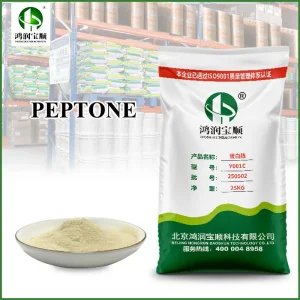
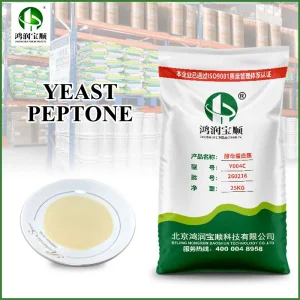
 Hongrun Baoshun