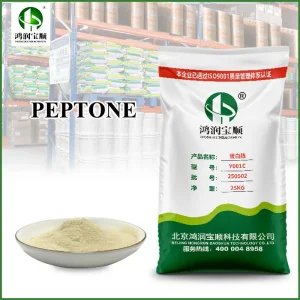
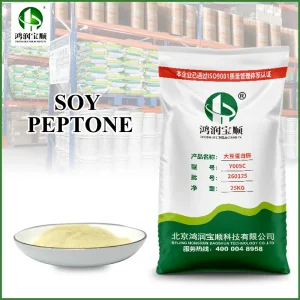
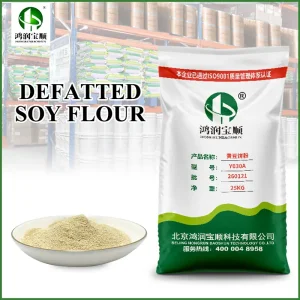
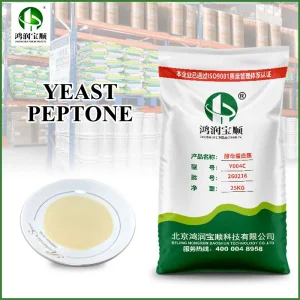
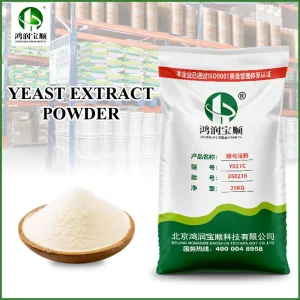
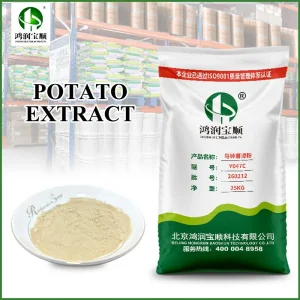
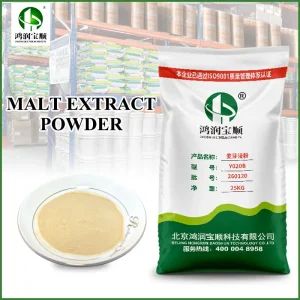
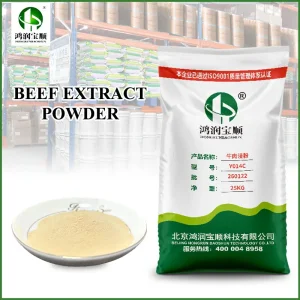
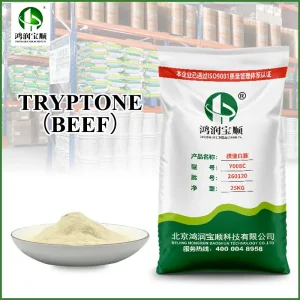
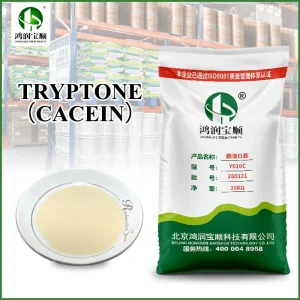
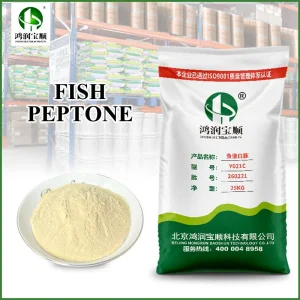
Premium grade bio-nutrients optimized for culture media and industrial fermentation.
Peptones represent highly complex mixtures of organic nitrogenous substances obtained by the controlled hydrolysis of natural proteinaceous materials including casein, gelatin, meat, soy, yeast, and wheat. Unlike chemically defined media, peptones contain a comprehensive array of peptides (ranging from free amino acids to high molecular weight oligopeptides), growth factors, vitamins, minerals, and trace elements. This chemical complexity makes peptones indispensable for optimizing cell density, enzyme yield, and recombinant protein production in industrial fermentations.
For biotechnological applications in Germany—where advanced biopharmaceutical engineering, probiotic formulation, and brewing culture validation dominate—the choice of peptone is critical. The profile of peptide chain lengths directly influences cellular uptake rates. Free amino acids are immediately metabolized, while small-to-medium chain peptides provide a sustained nitrogen release that prevents premature cell death and mitigates metabolic stress in bioreactor vessels.
Germany is the leading biotechnology powerhouse in Continental Europe. Regulatory structures monitored by the Federal Institute for Drugs and Medical Devices (BfArM) and the Paul-Ehrlich-Institut (PEI) demand uncompromising documentation regarding raw material safety. A key concern for German bioprocess engineers is the reduction of BSE/TSE risk (Bovine Spongiform Encephalopathy) and mycoplasma contamination.
Consequently, there is a prominent shift in German pharmaceutical biotechnology toward plant-derived peptones (specifically Soy and Wheat Peptones) and Yeast Extracts. Plant-based and yeast-based peptones eliminate the risk of mammalian viral transmission entirely. Moreover, for food-grade enzymes and probiotics, compliance with MUI Halal and Kosher certifications has become a standard purchasing prerequisite, allowing German exporters to ship final formulations worldwide without regulatory friction.
Beijing Hongrun Baoshun Technology Co., Ltd. (established in 2008 in the China (Beijing) Pilot Free Trade Zone Science and Technology Innovation Area) has bridged the gap between large-scale manufacturing capacity and European precision. Our production base in the Qili Industrial Park in Langzhong, Sichuan, covers 40,000 square meters, allowing us to perform high-throughput enzymatic digestion, spray drying, and ultrafiltration at scales that few European custom blenders can match.
This massive operational scale delivers major cost efficiencies while maintaining strict lot-to-lot consistency. Our independent production lines for animal-derived and plant-derived products completely eliminate cross-contamination risks. With comprehensive automated processing and raw material control, we guarantee that German biotech developers receive high-purity, stable, and highly soluble peptone powders that match standard EDQM specifications.
Adhering to a strict "no substandard products leave the factory" policy, backed by ISO9001:2015 and MUI Halal certifications.
Large batch sizes and a 20,000 square meter storage capacity shield German partners from supply chain volatility and inflation.
Independent production lines ensure strict containment. Plant-derived and yeast products are certified BSE/TSE-free.
Tailored nitrogen substrates designed to maximize yield and purity in specific bio-applications.
High solubility and clarity substrates for dehydrated media production in German diagnostics.
Ultra-pure low-endotoxin peptones supporting research in protein expression and monoclonal antibodies.
Large-scale organic nitrogen feeds supporting enzymatic catalysis and industrial chemical synthesis.
Nutrient arrays for optimizing the viability and stabilization of live lactic acid bacteria strains.
Nutrient foundations for biopesticides and organic soil fertilizers enhancing microbial growth.
Managing procurement cycles within Germany's biotechnology industry requires balancing strict quality criteria with secure supply chains. Recent global logistical shifts have highlighted the dangers of just-in-time raw material procurement. Relying on single-source local European suppliers often results in delivery delays and supply shortages.
Hongrun Baoshun addresses these challenges by leveraging our 20,000 square meter storage capacity. We maintain stable buffer stocks of yeast extracts, animal peptones, and plant peptones ready for direct export. Working with shipping lines serving major German ports like Hamburg, Bremen, and Wilhelmshaven, we offer predictable delivery timelines. We also supply customized packaging options, including moisture-resistant 25kg fiber drums, keeping raw materials fresh during transit.
A major advantage of our facility is the capability to customize peptone specifications for specific bioreactor processes. Because different microbial strains—such as Escherichia coli, Bacillus subtilis, or Saccharomyces cerevisiae—have varying metabolic requirements, a generic peptone may limit overall yield.
Our technical team works closely with German bioprocess engineers to optimize custom parameters:
High-purity raw materials sourced and processed under strict pharmaceutical-grade quality controls.
The global fermentation raw materials market is shifting toward animal-free, chemically defined, or highly purified plant and yeast peptones. This transition is driven by three main factors:
Through our research and development divisions—including specialized subsidiaries like Sichuan Baoshun Biotechnology and Sichuan Romgee Biotechnology—we invest in improving enzymatic hydrolysis technology. Our goal is to provide peptones with targeted molecular weight profiles, ensuring consistent bioprocess performance.
Expert answers regarding our peptone sourcing, certifications, and logistics for the German market.
 Hongrun Baoshun