High-purity organic nitrogen sources designed for biological culture and manufacturing facilities throughout Japan.
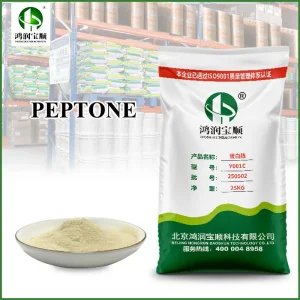
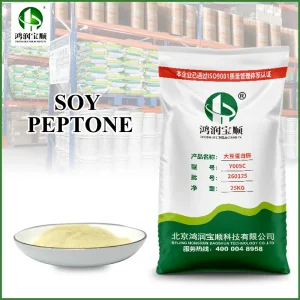
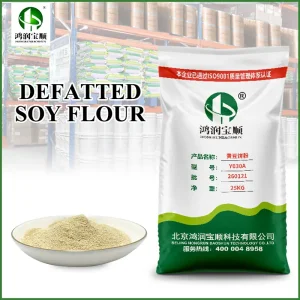
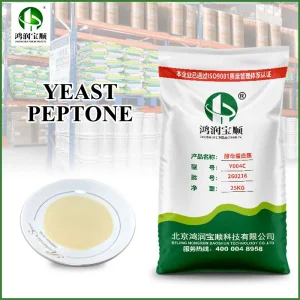
Japan has long stood at the global forefront of biotechnology, enzyme production, and industrial fermentation. From the traditional scaling of Koji-based processes to the state-of-the-art biopharmaceutical production centers in Tokyo, Osaka, and Kobe, Japanese manufacturers demand unprecedented control over raw material specifications. The growth of regenerative medicine, biosimilars, and functional probiotics in the Japanese domestic market has created strict requirements for trace components, batch consistency, and raw material safety.
Peptones are the cornerstone of industrial bio-manufacturing. By serving as highly soluble, bioavailable sources of amino acids, peptides, vitamins, and trace elements, they determine the efficiency of cell expansion and target molecule expression. In Japan, biopharma developers face rigorous scrutiny from the PMDA (Pharmaceuticals and Medical Devices Agency) regarding raw material biological origins. This regulatory environment has driven a structural shift toward high-purity, animal-origin-free (AOF) plant peptones and yeast extracts, alongside certified safe bovine and porcine hydrolysates.
On a global scale, the biological manufacturing sector is shifting to minimize contamination risks, such as Bovine Spongiform Encephalopathy (BSE) and Transmissible Spongiform Encephalopathies (TSE). As a result, peptone manufacturers must maintain completely isolated production lines. Beijing Hongrun Baoshun Technology Co., Ltd. addresses this need with dedicated manufacturing facilities for animal-derived and plant-derived products. This physical separation prevents cross-contamination and ensures compliance with global safety standards.
How our manufacturing processes achieve precise molecular weight distributions and chemical consistency.
Utilizing high-purity endo- and exo-peptidases to target specific peptide bonds. This allows us to customize the ratio of free amino acids to short-chain oligopeptides, optimizing microbial assimilation rates.
Employing multi-stage membrane filtration to remove heavy metals, macromolecular proteins, and excess inorganic salts. Low salt profiles are critical for preventing osmotic shock in sensitive cell cultures.
Our quality control relies on HPLC peptide mapping, amino acid analyzers, and endotoxin monitoring. Every batch is supplied with a comprehensive Certificate of Analysis (COA) detailing total nitrogen, amino nitrogen, moisture, ash, and pH.
One of the largest hurdles in biomanufacturing is batch-to-batch variability. Variations in raw materials can disrupt growth kinetics in large-scale bioreactors, leading to costly yield drops. To address this, we rely on automated temperature control and exact enzyme dosages during digestion. Our production plant in Langzhong, Sichuan, features dedicated, high-capacity reaction vessels. This setup allows us to manufacture single-batch sizes up to several metric tons, ensuring consistent performance for large-scale industrial buyers.
Expanding options for custom microbial fermentation, feed additive stabilization, and complex medium formulations.
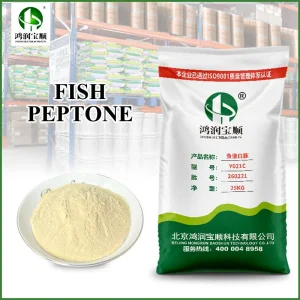
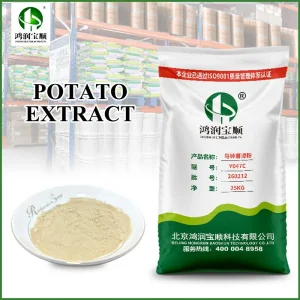
Maintaining a resilient supply chain is a top priority for manufacturing companies. Our production facilities, spanning Phase I and Phase II in the Langzhong Qili Industrial Park, cover over 40,000 square meters, supported by a 20,000 square meter storage facility. This allows us to keep large quantities of finished goods in stock, ensuring stable lead times and mitigating the risk of raw material shortages.
In addition to our physical infrastructure, we support our clients with a range of supply chain services, including:
Tailoring our peptones and extracts to the unique requirements of Japanese biotechnological sub-sectors.
Japan is a major market for functional foods and drinks containing strains like Lactobacillus and Bifidobacterium. Our fish peptone and yeast extracts supply the amino acids, nucleotides, and vitamins needed to support high cell densities in these probiotic cultures.
For biopharmaceutical production, animal-origin-free (AOF) components are key to reducing contamination risks. Our soy peptone and wheat peptone serve as reliable organic nitrogen sources for cell culture and vaccine development.
Clinical diagnostic laboratories rely on highly consistent media to ensure accurate testing. Our pancreatic digests of casein (tryptones) and high-clarity beef extracts provide the nutrients required to cultivate fastidious pathogens, supporting reliable diagnostic assays.
A complete selection of peptones, extracts, and infusions to support industrial fermentation in Japan.
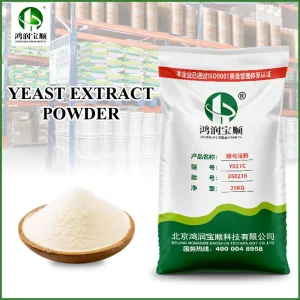
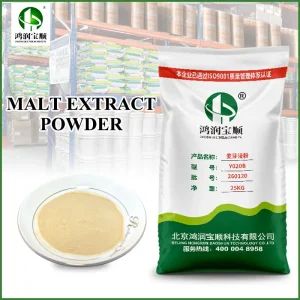
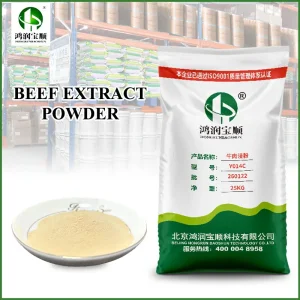
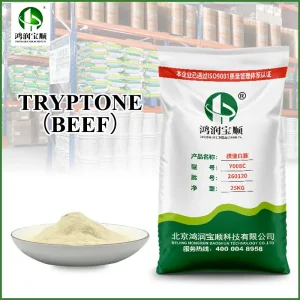
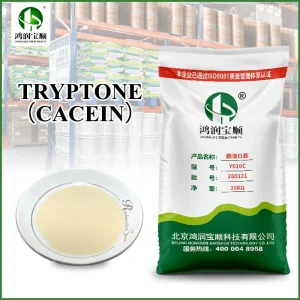
Answers to technical and logistical queries from biotechnology buyers and research laboratories in Japan.
We source animal materials only from regions certified free of BSE/TSE. Additionally, our dedicated animal-derived and plant-derived production lines are physically isolated to prevent cross-contamination.
Yes. We can customize the digestion time, enzyme selection, and molecular weight distribution to optimize the nitrogen source for your target microorganism.
Our manufacturing facilities are certified under ISO 9001:2015 and MUI Halal, meeting international safety and quality standards.
Standard products ship from our warehouses within 1 to 2 weeks. Ocean transport from Shanghai or Qingdao to major Japanese ports (Tokyo, Osaka, Yokohama) generally takes 3 to 5 days.
Yes, we provide free evaluation samples of up to 500g per product, with the buyer covering shipping fees. Contact us directly to arrange your sample shipment.
 Hongrun Baoshun