Explore our high-performance organic nitrogen sources, developed to optimize microbial proliferation and yield consistency.
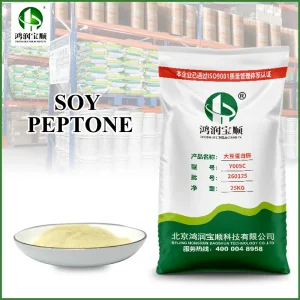
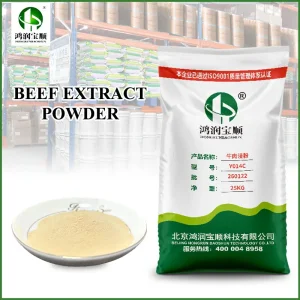
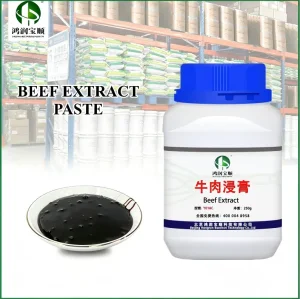
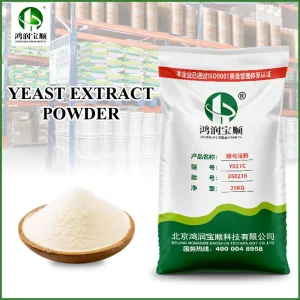
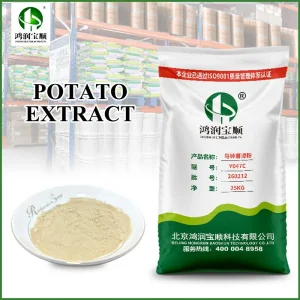
In industrial biotechnology and diagnostic microbiology, yeast extract represents the pinnacle of complex, undefined organic nitrogen supplementation. Unlike chemically defined media, high-purity yeast extract derived from Saccharomyces cerevisiae delivers a synergistic spectrum of free amino acids, low-molecular-weight peptides, vitamins (particularly the water-soluble B-complex), and essential trace minerals. This rich matrix functions not merely as a nutrient source but as a metabolic catalyst that dramatically reduces the lag phase of bacterial, fungal, and recombinant host cell cultures.
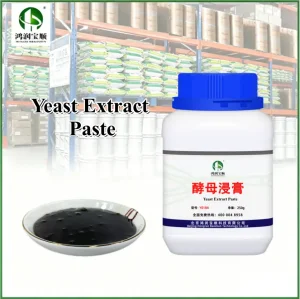
The biological efficacy of our yeast extract is anchored in precision autolysis. Controlled enzymatic hydrolysis breaks down cell walls and cellular structural proteins without denaturing the sensitive growth factors. This method maintains an optimal ratio of amino nitrogen (AN) to total nitrogen (TN)—typically within the 35% to 48% range—which ensures high bioavailability. The absence of chemical hydrolysis prevents the formation of inhibitory salts or toxic by-products, ensuring high-yield performance in sensitive bioreactor runs.
| Analytical Parameter | Standard Powder Range | High-Purity Paste Range | Nutritional Significance |
|---|---|---|---|
| Total Nitrogen (TN) | ≥ 10.0% | ≥ 8.5% | Foundational nitrogen source for protein synthesis |
| Amino Nitrogen (AN) | ≥ 4.5% | ≥ 3.5% | Directly bioavailable peptides & free amino acids |
| Moisture Content | ≤ 6.0% | 30.0% - 35.0% | Determines shelf-stability and osmotic profile |
| Ash Value | ≤ 15.0% | ≤ 10.0% | Measures inorganic minerals & salt levels |
| pH (2% Solution) | 5.3 - 7.2 | 5.5 - 7.0 | Physiological buffering compatibility for culture media |
Meeting strict compliance standards and batch consistency requirements across diverse industrial sectors.
Procurement groups in biopharmaceutics require raw materials that avoid animal-derived components to prevent Transmissible Spongiform Encephalopathies (TSE) and Bovine Spongiform Encephalopathy (BSE). Our non-animal yeast extracts provide a reliable safety profile.
Variance in raw materials can disrupt metabolic pathways during large-scale fermentation. We leverage automated process controls to standardize carbohydrate residue levels and molecular weight profiles across all batches.
Sourcing raw materials on time is critical. With over 20,000 square meters of storage and dedicated production lines, we offer reliable lead times to mitigate supply chain disruptions for global partners.
Established in 2008 in the China (Beijing) Pilot Free Trade Zone Science and Technology Innovation Area, Beijing Hongrun Baoshun Technology Co., Ltd. has grown into a modern high-tech enterprise. Integrating research, development, production, and sales, we hold dual certifications as a National "High-tech Enterprise" and a "Zhongguancun High-tech Enterprise."
In 2018, we expanded our production footprint to the Qili Industrial Park in Langzhong, Sichuan. Phase I and Phase II factories span over 40,000 square meters, featuring a 20,000 square meter storage facility. Supported by over 100 specialists, we run independent production lines for both animal and plant-derived raw materials. This setup enables us to deliver peptones, beef extracts, and yeast powders in bulk quantities with customizable technical profiles.

Tailored raw materials that support growth yields across diverse bioprocess workflows.
Providing clean nitrogen sources containing vitamins, amino acids, and growth factors. These components help sustain growth profiles in bioreactors for vaccine antigen production and recombinant therapeutic proteins.
Our yeast extract powders serve as primary ingredients in dehydrated media like Yeast Extract Agar (YEA), Sabouraud Dextrose Agar (SDA), and Luria-Bertani (LB) Broth, supporting standard microbiological analysis.
Designed to optimize cell viability in high-density cultures of probiotic strains like Lactobacillus and Bifidobacterium, as well as bio-pesticides and organic agricultural inoculants.
Enhancing enzyme expression levels in industrial fungi and bacteria. Ideal for starch processing, textile enzymes, and detergent additives where yield efficiency directly affects operational cost.
We collaborate with industrial clients to adjust parameter specifications—including clarification profiles, filtration rates, ash values, and specific nutrient concentrations—matching raw materials directly to plant bioreactor requirements.
Five specialized subsidiaries operating under integrated quality and supply chain protocols.
Our specialized subsidiaries work in tandem to support research, quality management, and international distribution:

Quality assurance at our sites is built on the rule that "no substandard products leave the factory." We operate under strict process audits and hold the following certifications:
Our technical customization pathway ensures final products are aligned with your bioreactor specifications.
Evaluating target parameters including pH, ash, solubility, amino nitrogen, and clarity.
Adjusting the autolysis process and molecular weight separation profile in our pilot lab.
Providing up to 500g samples (freight excluded) for lab and pilot testing.
Moving to commercial production with batch records and batch-to-batch trace tracking.
Advancing biotechnological media through precision molecular separation and process control.
As biological processes scale up, modern cultivation platforms demand narrower tolerances in nutrient feedstocks. Future developments in microbial culture media point toward cell-line-specific optimization. To meet these requirements, we are expanding our focus on ultra-filtration and nano-filtration processing. This method separates peptides within specified Dalton ranges (e.g., restricted to under 1,000 Da or 3,000 Da) to limit target variance in sensitive host cultures.
Simultaneously, we are developing low-salt and salt-free yeast extracts to avoid the osmotic stress that inorganic salts can impose on sensitive cells in high-density cultivations. Through automated enzymatic hydrolysis, we aim to consistently manage nutrient availability, helping our global partners scale their processes efficiently.
Common technical questions answered by our application engineers.
Yeast extract is produced by autolytic cell-wall degradation, yielding B-vitamins, nucleotides, and trace elements alongside amino acids. Peptones (whether animal or plant-derived) are created via enzymatic digestion of target proteins, typically offering longer-chain peptides. Combining them often provides a balanced, synergistic growth media profile.
We run completely separate, independent lines for animal-derived materials (such as beef extract and peptone) and plant-derived materials. This strict operational separation prevents cross-contamination, ensuring our plant and yeast lines remain animal-free for kosher, halal, and biotech requirements.
Our yeast extract powders have a standard shelf-life of 24 months when kept sealed in dry conditions. Paste forms generally stay stable for 12 months when stored at cool temperatures (2°C - 8°C). Keeping containers tightly sealed is essential, as the material is highly hygroscopic.
Please contact our technical team with your desired values for amino nitrogen, solubility, salt level, and pH. We will formulate a lab test batch, run analytic validations, and send a pilot sample (up to 500g) for evaluation in your process.
Our wider range of fermentation media, plant proteins, and microbial solutions.
 Hongrun Baoshun