Direct from our state-of-the-art biological manufacturing facility. Fully traceably produced, optimized for batch and continuous bioreactor processes.
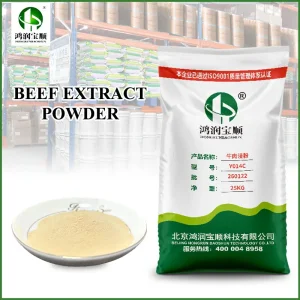
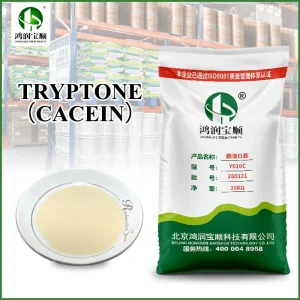
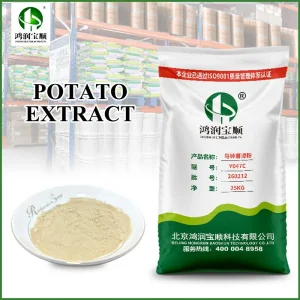
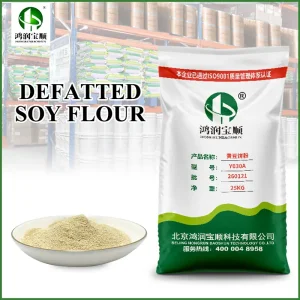
Established in 2008 in the China (Beijing) Pilot Free Trade Zone Science and Technology Innovation Area, Hongrun Baoshun has grown into a leading high-tech modern enterprise integrating R&D, manufacturing, and global sales of premium microbial fermentation raw materials.
As a recognized national "High-tech Enterprise" and "Zhongguancun High-tech Enterprise," we operates under a stringent quality system where no substandard products ever leave our facilities. In 2018, we expanded our manufacturing capabilities to the Qili Industrial Park in Langzhong, Sichuan, setting up specialized production and storage hubs to guarantee steady industrial-scale supply chains.

A Deep-Dive Whitepaper on Batch Culture vs. Continuous Culture Bio-Reactor Dynamics and Nutritional Feed Criteria
Industrial microbial cultivation sits at the core of modern biotechnology. Cultivation methodologies are broadly categorized into two fundamental paradigms: Batch Culture (a closed system) and Continuous Culture (an open system). Understanding the metabolic differences, growth kinetics, and physiological behaviors of cells under these two environments is critical for B2B procurement managers and bioprocess engineers aiming to optimize yield, control secondary metabolite production, and manage operational costs.
| Parameter / System | Batch Culture (Closed System) | Continuous Culture (Open System) | |
|---|---|---|---|
| Nutrient Profile | Continuously depleting from initial high concentrations. | Maintained at a steady-state constant level. | Concentrations drop until starvation triggers stationary phase. |
| Waste Products | Accumulate throughout the growth cycle. | Constantly diluted and washed out. | Toxic metabolites limit final cell density. |
| Cell growth Phase | Dynamic transitions (Lag, Log, Deceleration, Stationary, Death). | Maintained indefinitely in the exponential (log) phase. | Allows continuous harvesting of primary metabolites. |
| Flow Kinetics | Zero inflow, zero outflow (excluding gas/pH correctors). | Equal and constant flow rate of fresh medium feed and harvest. | Defined by Dilution Rate (D) matching Specific Growth Rate (μ). |
| Primary Application | Secondary metabolites (Antibiotics), enzyme expression, vaccine production. | Single-cell protein production, bioremediation, physiological studies. | Ideal for high-volume, low-margin products or highly stable cell lines. |
In a Batch Culture, microorganisms undergo a predictable series of growth phases. The initial high substrate concentration decreases as cells enter the exponential growth phase. Because metabolic waste accumulates and essential nutrients exhaust, cells transition into the stationary phase. It is during this deceleration and stationary phase that many secondary metabolites—such as antibiotics, pigments, and enzymes—are synthesized due to metabolic stress responses.
Conversely, Continuous Culture (using Chemostats or Turbidostats) operates under a state of dynamic equilibrium. Fresh nutrient media is continuously pumped into the bioreactor at the same rate that culture liquid containing cells and metabolic products is withdrawn. By adjusting the Dilution Rate ($D$), operators can control the specific growth rate of the cells, keeping them permanently in the exponential phase. This is highly advantageous for processes where cell-associated products (like recombinant proteins or primary metabolites) are desired, as it prevents down-time associated with reactor cleaning, sterilization, and lag-phase transitions.
In both systems, the bioavailability of organic nitrogen sources (e.g., Peptones, Yeast Extracts) is the primary limiting factor for cell density and protein expression. Batch cultures require highly buffered nitrogen sources to resist pH shifts, while continuous systems require high-solubility, low-precipitation peptones to prevent filter clogging and feed-line fouling.
The industrial biomanufacturing industry is witnessing a significant shift toward Continuous Bioprocessing, driven by the biopharmaceutical and chemical sectors. Key trends include:
Strategic variables and quality parameters critical for procurement officers evaluating bulk fermentation raw materials.
Variations in the molecular weight distribution of peptones or nitrogen profiles in yeast extracts disrupt feeding control loops. Hongrun Baoshun enforces strict standardization with an index variation limit (CV < 5%) across all raw material batches.
High-turbidity peptones cause membrane fouling in continuous perfusion filtration. Our raw materials undergo micro-filtration and specialized spray drying, achieving instantaneous, sediment-free dissolution at target concentrations.
Full traceability is non-negotiable. Hongrun Baoshun's facilities hold ISO 9001:2015 and MUI Halal certifications. We supply complete Certificate of Analysis (CoA) reports, including molecular weight distribution profiles and total nitrogen assays.

B2B procurement of fermentation raw materials requires stable supply structures that can withstand geopolitical fluctuations and transport bottlenecks. Beijing Hongrun Baoshun Technology Co., Ltd. has established a dual-region industrial footprint to mitigate risks and ensure delivery continuity.
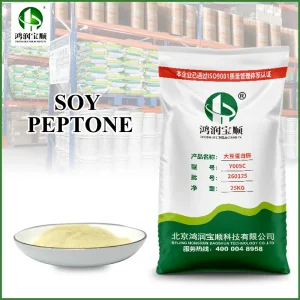
By transitioning its production hub to the Qili Industrial Park in Langzhong, Sichuan, the company established a production base spanning 40,000 square meters. The Sichuan location features dedicated animal-derived and plant-derived production lines. This physical isolation prevents cross-contamination, ensuring that products like Soy Peptone are 100% free of animal DNA.
With a continuous storage reserve space of 20,000 square meters, Hongrun Baoshun holds extensive buffer stocks of critical inputs. This enables us to guarantee stable contract pricing and rapid global logistics dispatch, shielding international buyers from spot market price spikes.
How our organic nitrogen raw materials optimize biological kinetics in different industrial sectors.
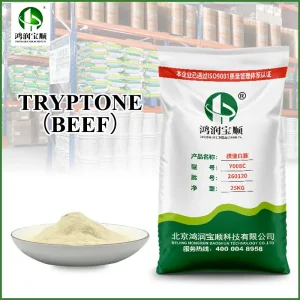
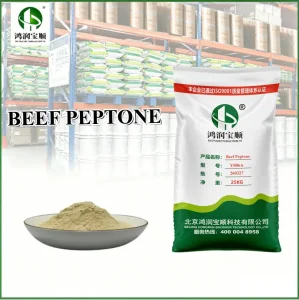
Requires raw materials with high free amino acid profiles and minimal endotoxin levels. Our Beef Peptone and Tryptone Casein serve as high-grade substitutes for imported pharmaceutical media components, ensuring high-density cell growth and vaccine yield.
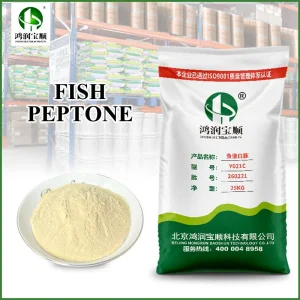
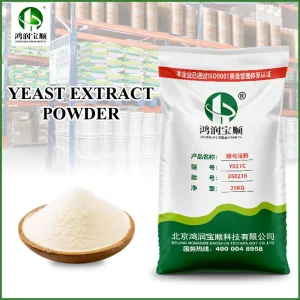
Industrial production of Lactobacillus, Bifidobacterium, and Bacillus species depends heavily on nitrogen source bio-accessibility. Fish Peptone and Yeast Extract Powders supply key growth factors, nucleotides, and vitamins, reducing lag phase times.
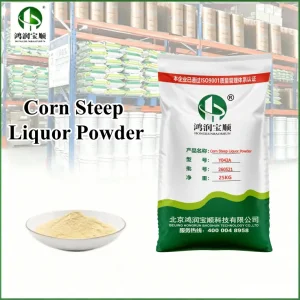
For bulk biopesticides, inoculants, and animal feed additives. Materials like Soybean Meal, Soybean Flour, and Corn Steep Liquor Powder provide highly cost-effective bulk nitrogen sources, optimized for large-scale batch and solid-state fermentation.
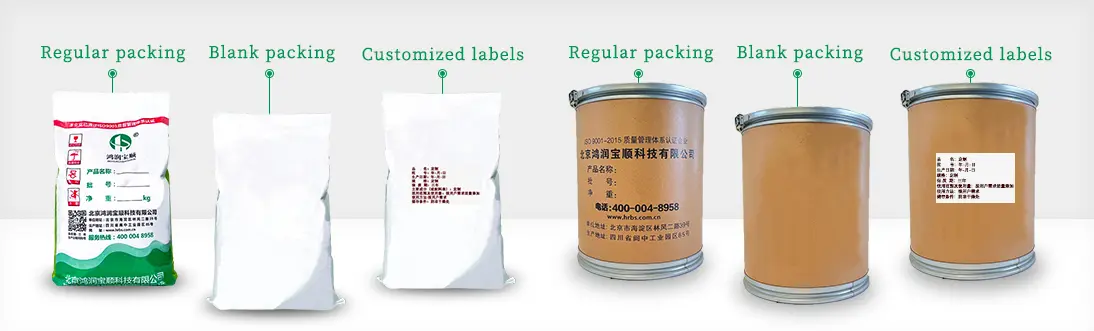
At Hongrun Baoshun, we recognize that no two industrial fermentation lines are identical. Changes in oxygen transfer rates, impeller shear stress, and feed rates alter how cells interact with peptones and extracts. To address these variations, we provide dedicated customization and pre-sales engineering consulting services:
Detailed technical insight addressing critical procurement and usage concerns.
Complete your media specifications with our premium range of peptones, extracts, and plant-based protein powders.
 Hongrun Baoshun