Explore our premium animal, plant, and yeast-derived nutrients optimized for industrial fermentation pipelines globally.
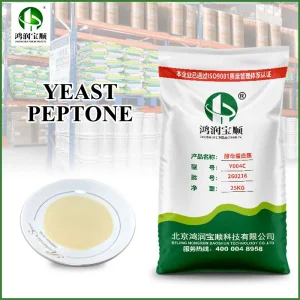
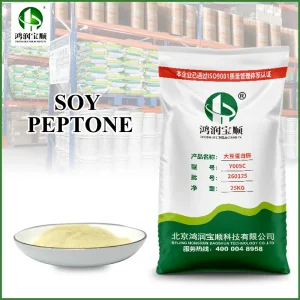
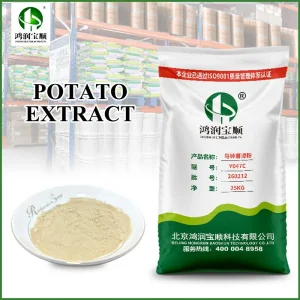
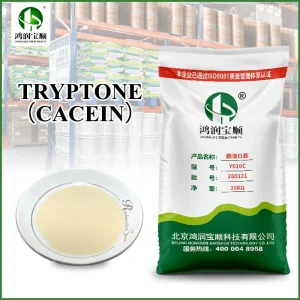
Propionic acid (CAS 79-09-4) is a valuable short-chain fatty acid extensively utilized as a preservative in human food and animal feed, and as an essential precursor molecule for plasticizers, herbicides, pharmaceuticals, and performance polymers. While historically synthesized through petrochemical oxo-synthesis from ethylene, the global paradigm shift towards sustainable bio-refining has catalyzed a massive surge in industrial-scale propionic acid fermentation.
Biological synthesis relies primarily on propionic acid-producing bacteria (PAB), mainly belonging to the genus Propionibacterium (such as P. acidipropionici, P. freudenreichii, and P. shermanii). These anaerobic microorganisms metabolize carbon substrates via the complex dicarboxylic acid pathway (also known as the Wood-Werkman pathway). Through this pathway, pyruvate generated from glycolysis is carboxylated to oxaloacetate, then sequentially reduced to malate, fumarate, succinate, and finally converted to propionyl-CoA, yielding propionic acid as the primary metabolic end-product.
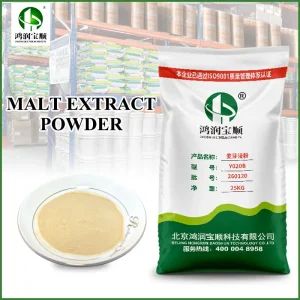
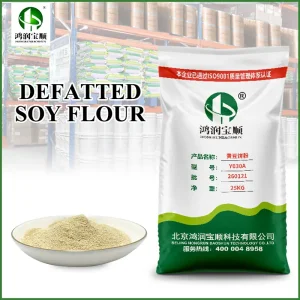
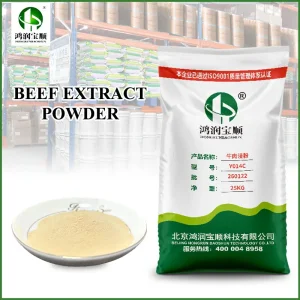
Unlike simple monocultures, Propionibacterium strains are highly fastidious, requiring rich supplies of organic nitrogen, B-vitamins, and growth factors to sustain high cell densities and maintain fermentation kinetics. The selection of organic nitrogen—such as high-purity yeast peptones, soy peptones, casein tryptones, and beef extracts—directly dictates the metabolic flux, bio-yield, and final concentration of propionic acid. Providing well-balanced amino acid profiles and peptide fractions reduces metabolic load, accelerating production rates.
Innovations in genetic engineering and downstream processing are paving the way for next-generation biological synthesis.
Traditional wild-type strains suffer from feedback inhibition by accumulated propionate and acetate. Advanced molecular roadmaps leverage CRISPR-Cas9 to knock out competing pathways (such as acetate kinase genes) and overexpress rate-limiting enzymes like methylmalonyl-CoA mutase. This shifts the metabolic carbon flux almost entirely towards propionic acid production, maximizing fermentation efficiency.
As propionic acid concentrations rise, acidity increases, inhibiting bacterial growth. Integrating online separation mechanisms—such as electrodialysis with bipolar membranes, extractive fermentation, or anion-exchange adsorption—allows real-time removal of propionate from the live broth. This continuous removal system maintains optimal growth conditions, extending cell viability and batch duration.
The future economic viability of bioproduction relies on shifting away from food-grade glucose to non-food biomass. Research is optimizing strains to co-ferment pentose (xylose) and hexose (glucose) sugars derived from agricultural residues. Feeding these complex sugar streams, supplemented with structured botanical nutrients like soy peptone, minimizes raw material input costs.
Bridging pure biotechnology with large-scale industrial application requires robust infrastructure and optimized media formulation.
For global bio-manufacturers, scaling propionic acid fermentation from laboratory shake flasks to 100,000-liter bioreactors involves significant technological hurdles. Key challenges include maintaining oxygen-free anaerobic environments, heat dissipation, and ensuring nutrient homogeneity throughout the tank.
Hongrun Baoshun supports industrial-scale fermentation operations by providing bulk-scale, certified organic nitrogen sources that deliver consistent growth factors. By maintaining precise molecular weight distributions of peptones and amino acid ratios, our solutions ensure predictable growth phases and product yields in large-scale operations.

Established in 2008 in the China (Beijing) Pilot Free Trade Zone Science and Technology Innovation Area, leading the bio-fermentation raw materials industry.
Leveraging our technical expertise and commitment to quality, we have evolved into a modern high-tech enterprise integrating research and development, production, and sales. We stand out as a distinguished recipient of dual certifications as a national "High-tech Enterprise" and a "Zhongguancun High-tech Enterprise."
In 2018, we upgraded our strategic layout by expanding our production footprint to the Qili Industrial Park in Langzhong, Sichuan. Phase I and Phase II factories cover over 40,000 square meters. With a workforce of more than 100 employees, we operate independent animal and plant production lines to craft a diverse range of products, including peptones and yeast (extract) powders. This separation guarantees complete compliance with strict dietary and regulatory standards.
Harnessing smart manufacturing and automation to secure global supply chains and control costs.
Our Sichuan facility utilizes automated spray drying, vacuum concentration, and enzyme hydrolysis reactors. The system is monitored via SCADA control centers, ensuring precise temperature and enzymatic digestion parameters to produce high-purity peptone with zero deviation.
We adhere to the strict principle that "no substandard products leave the factory." We monitor heavy metals, ash content, transparency, total nitrogen, and amino nitrogen ratios across all production steps, backed by ISO 9001:2015 and MUI Halal certifications.
Our five subsidiaries—Beijing Yaoyou Technology, Sichuan Baoshun Biotechnology, Sichuan Romgee Biotechnology, Sichuan Yingwen Technology, and Sichuan Runxiaobao Technology—work in synergy to manage our supply chain from raw material procurement to international logistics.
Supporting customized products tailored to different customer demands, industries, and applications.
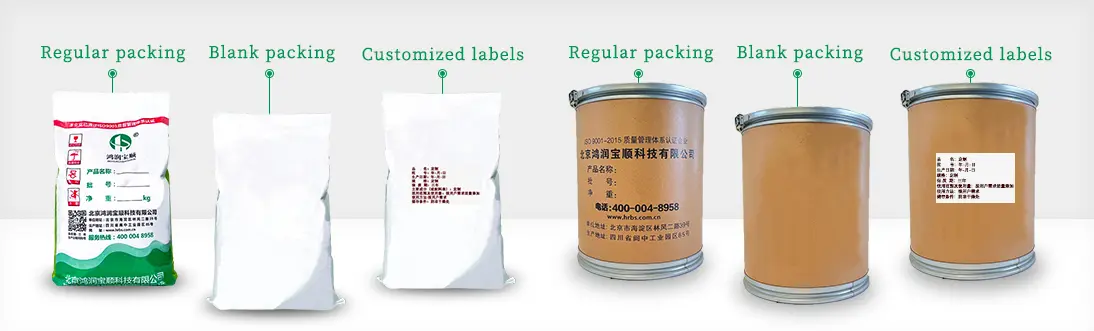
Due to the diversity of bacterial species and varying industrial environments, standard media formulations do not always yield optimal results. Beijing Hongrun Baoshun Technology Co., Ltd. provides customized development services for different industries, functions, and scales to meet diverse fermentation requirements.
Ensuring cross-border regulatory compliance and seamless integration into global supply chains.
Biotechnology products must meet strict regulatory and safety standards before integration into food, pharma, or agricultural feed systems. We align our manufacturing processes with global standards to simplify compliance audits for our clients.
Our raw materials conform to Halal standards, enabling customers to access dietary-compliant consumer markets in Southeast Asia and the Middle East without reformulation barriers.
Our quality management systems are certified to ISO 9001:2015. Every step, from sourcing agricultural raw materials to final packaging, is fully documented to ensure complete traceability.
We maintain strict separation between our animal-derived and plant-derived processing equipment. This ensures no cross-contamination occurs, supporting clients who require vegan, non-GMO, or animal-free fermentation media.
Expert answers to common engineering questions regarding yield optimization, carbon-nitrogen balance, and scale-up.
Propionic acid bacteria (PAB) are heterotrophic and lack the pathways to synthesize several essential amino acids and vitamins (particularly B-complex vitamins). Yeast peptones and extracts supply these ready-made peptides and co-factors, which helps reduce the cell's energy expenditure on synthesis and shifts metabolic flux toward propionate production.
Soy peptone provides high concentration of carbohydrates and long-chain peptides, making it an excellent sustainable source for biomass accumulation. Yeast peptone is rich in free amino acids and B-vitamins, which is ideal for active growth phases. A combination of both is often utilized to optimize growth and product synthesis.
Acetate is a common by-product that reduces the purity of propionic acid. Controlling dissolved oxygen (maintaining strict anaerobic conditions), keeping the pH between 6.0 and 7.0, and optimizing the carbon-to-nitrogen ratio helps ensure metabolic pathways favor propionate production over acetate.
Yes, we provide free samples of up to 500g per product (excluding shipping fees). This allows research labs and QA engineers to test and validate our materials in their specific fermentation systems before committing to bulk purchases.
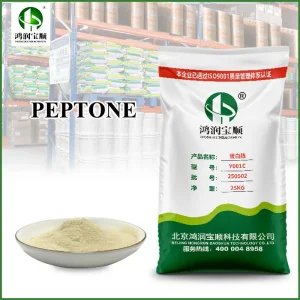
We offer flexible packaging ranging from standard 25kg multi-layer kraft bags with PE liners to large bulk super sacks, customized to align with your automated powder handling and feeding systems.
Premium raw materials designed for high-yield industrial culture media and biochemical processes.
 Hongrun Baoshun