Hongrun Baoshun
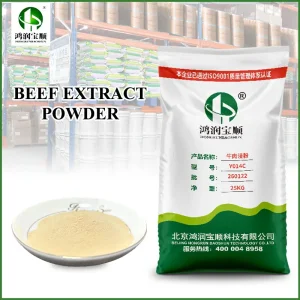
1. Executive Summary & Structural Overview
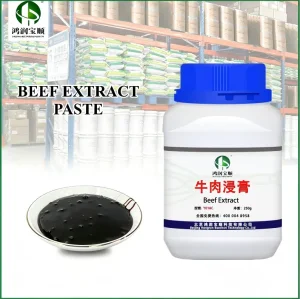
In modern industrial biotechnology, the selection of raw materials determines the efficiency, safety, and economics of biological processes. Beef Extract Powder is a crucial source of organic nitrogen, vitamins, co-factors, and minerals. Unlike refined single amino acid feeds, it provides a comprehensive nutrient matrix that supports rapid microbial growth, heavy cell density, and secondary metabolite production.
This whitepaper, prepared by Beijing Hongrun Baoshun Technology Co., Ltd., analyzes the role of beef extract powder in fermentation processes. We explain its extraction chemistry, discuss industrial applications, evaluate global supply chains, and outline our rigorous quality control protocols.
Beef extract powder differs from peptones. Peptones are produced by digesting proteins enzymatically, whereas beef extract is a purified concentration of water-soluble substances from lean bovine muscle, dried to a fine powder. This makes it exceptionally rich in creatine, creatinine, carnine, purines, trace elements, and water-soluble B-complex vitamins.
2. Biochemical Composition and Extraction Science
The manufacturing process at our state-of-the-art facility in Langzhong, Sichuan, begins with certified, high-grade lean bovine tissue. Our process is strictly managed to ensure standard molecular weight distribution and biological activity:
- Enzymatic and Thermal Digestion: Controlled aqueous extraction dissolves the nitrogenous extracts of the muscle tissue.
- Concentration: High-vacuum low-temperature evaporators concentrate the liquor to paste form, preventing thermal degradation of heat-sensitive growth factors.
- Dehydration: Advanced spray-drying turns the paste into a highly soluble, non-hygroscopic fine powder.
The resulting powder contains a rich mixture of peptides, free amino acids, nucleotides, organic acids, and minerals. It has a high concentration of water-soluble B vitamins (thiamine, riboflavin, niacin) and minerals like potassium, phosphorus, and magnesium, which act as metabolic co-factors for microorganisms.