Industrial Nitrogen Sources & Custom Culture Media Components
Leading The Biotech Frontiers Since 2008
Beijing Hongrun Baoshun Technology Co., Ltd. was established in 2008 and is rooted in the China (Beijing) Pilot Free Trade Zone Science and Technology Innovation Area. Through unremitting technological pursuit and rigorous industrial execution, we have evolved into a modern, high-tech biotechnology enterprise integrating research and development, manufacturing, and international distribution.
We stand out as a distinguished recipient of dual certifications as a National "High-tech Enterprise" and a "Zhongguancun High-tech Enterprise". In 2018, we strategically expanded our production footprint to Langzhong, Sichuan, establishing Phase I and Phase II factories exceeding 40,000 square meters and an ultra-modern warehousing facility covering over 20,000 square meters.
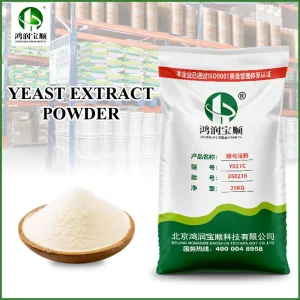
Supported by more than 100 fermentation scientists and operators, we utilize independent production lines for animal and plant derivatives to craft premium-grade peptones, tryptones, and yeast extracts. Guided by our strict policy—"no substandard products leave the factory"—we ensure ultimate batch consistency for sensitive microbial processes, including Klebsiella fermentation.

Strategic Insights on Pathway Optimization, Substrate Dynamics, and Nitrogen Nutrition
The genus Klebsiella, specifically Klebsiella oxytoca and Klebsiella pneumoniae, represents a powerful class of industrial microorganisms. Recognized for their diverse metabolic versatility, these facultative anaerobes possess a remarkable ability to metabolize a variety of carbon substrates, including hexoses, pentoses, and disaccharides like lactose. The lactose utilization pathway in Klebsiella is primarily mediated by the phosphoenolpyruvate-dependent phosphotransferase system (PTS) or the lac operon-encoded β-galactosidase enzyme. The cellular intake of lactose results in its cleavage into D-glucose and D-galactose, which subsequently enter glycolysis.
From an industrial perspective, optimizing the Klebsiella lactose fermentation process is a critical pathway for the eco-friendly synthesis of platform chemicals. Most notably, Klebsiella species are key producers of 2,3-butanediol (2,3-BD), acetoin, ethanol, succinic acid, and hydrogen. The optimization of this metabolic process requires precise control over pH, dissolved oxygen, and, most importantly, the nutritional composition of the fermentation broth. Our wholesale organic nitrogen sources serve as the structural backbone for these media formulations, delivering cellular nutrition that drives optimal enzymatic production and high biomass yield.
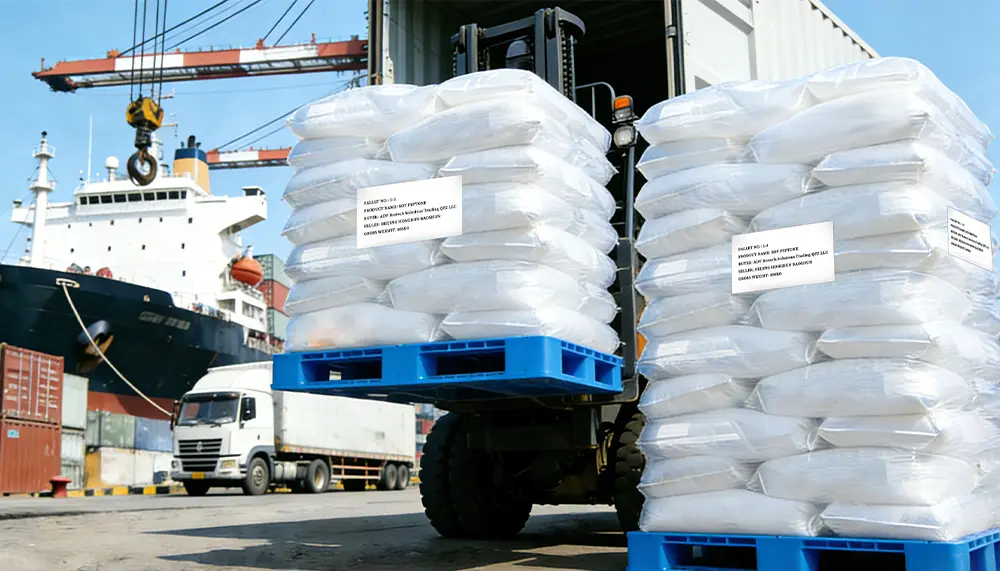
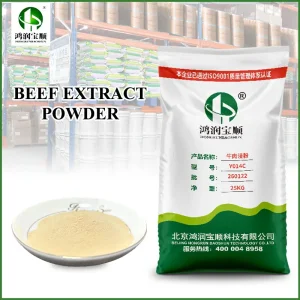
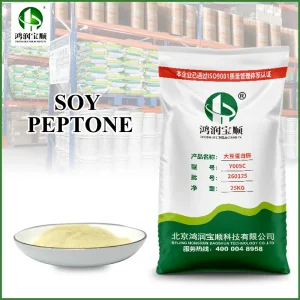
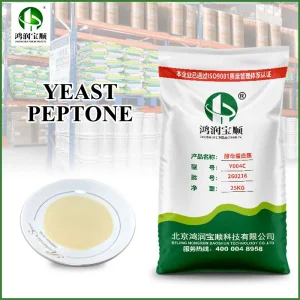
In industrial fermentation, inorganic nitrogen sources like ammonium salts are often insufficient for complex biological pathways. The enzymatic machinery required for lactose cleavage and downstream processing in Klebsiella requires complex, bioavailable proteins. Our factory's Beef Extract Powder, Yeast Peptone, and Soy Peptone deliver balanced profiles of free amino acids, peptides, vitamins, and minerals. When Klebsiella is cultured on a lactose substrate, the presence of plant-derived or animal-derived organic nitrogen reduces the metabolic lag phase. This nutrient-rich environment supports rapid growth, allowing the culture to transition smoothly into the stationary phase where valuable metabolites like 2,3-butanediol are synthesized at maximum rates.
Furthermore, maintaining consistency in nitrogen delivery is key to scaling production. Inconsistent nitrogen sources can trigger metabolic shifts, causing the bacteria to produce unwanted byproducts like acetate or lactate. By utilizing Hongrun Baoshun's standard-compliant, high-purity nitrogen sources, biotechnology manufacturers can stabilize pH drift, minimize batch-to-batch variations, and maximize overall product yield.
Why Leading Global Biotech Enterprises Partner with Hongrun Baoshun
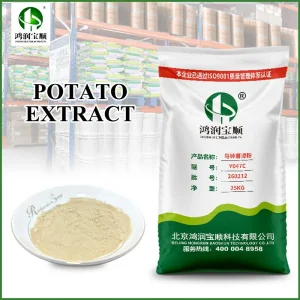
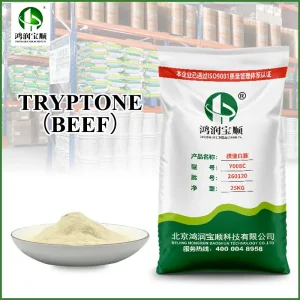
We provide a comprehensive catalog of fermentation raw materials, including animal-derived, plant-derived, and yeast-derived nitrogen sources to suit any culture requirements.
With our 40,000+ ㎡ Sichuan production base and 20,000 ㎡ storage space, we guarantee stable capacities and controllable delivery lead times for large-scale procurement.
Adhering to strict "no substandard products leave the factory" guidelines, we utilize advanced hydrolysis and purification technologies to ensure high-purity, stable performance.
To ensure our products align with your specific industrial strains, we offer free validation samples of up to 500g per product (shipping excluded).
We formulate custom molecular weight distributions, nitrogen contents, and solubility features tailored to the unique metabolic pathways of your production strain.
Our facilities are fully certified under ISO 9001:2015 and MUI Halal standards, facilitating smooth import clearance and integration into global food, agricultural, and pharma chains.
Serving Diverse Bio-Manufacturing Sectors Internationally
Industrial scale fermentation represents a cornerstone of the modern bio-economy. As global chemical manufacturing pivots away from fossil-based resources towards green, bio-based alternatives, microbial fermentation has become a dominant production method. The optimization of these biological systems requires high-quality nutrition to ensure maximum output across various sectors.
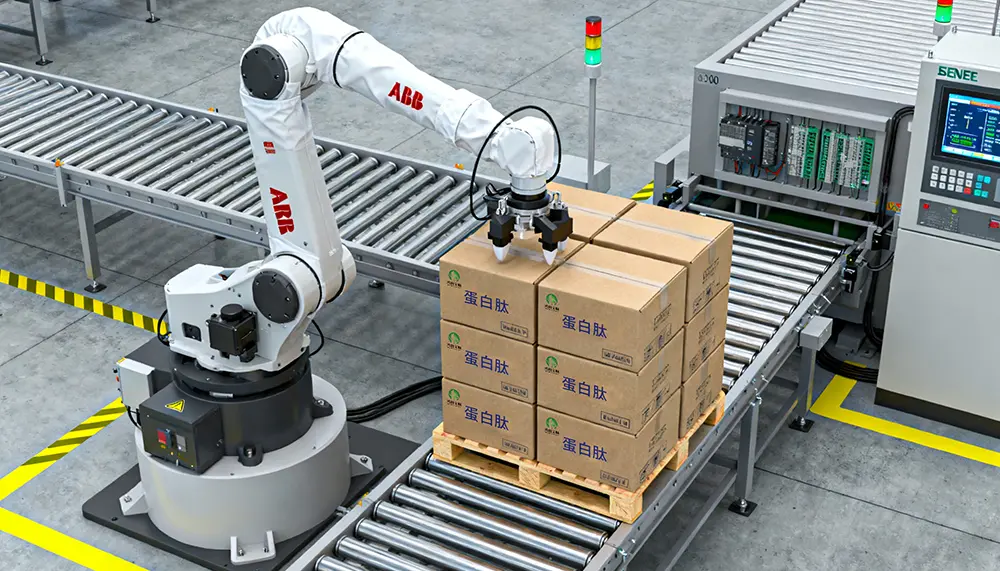
Adapting to Shift in Plant-Based Nitrogen & Synthetic Biology Specifications
Modern procurement directors are increasingly focusing on two major developments: material origin transparency and stringent regulatory compliance. The global biopharma and agricultural sectors are experiencing a significant shift from animal-derived media components to plant-derived alternatives (such as Soy Peptone and Wheat Peptone) to mitigate risk and meet market preferences. This transition requires suppliers who can deliver plant-based nutrients that match the rich nutritional profile of traditional animal-derived options.
At Beijing Hongrun Baoshun Technology Co., Ltd., we have responded to this demand by upgrading our plant extraction lines, achieving high bioavailability and clean solubilities in our plant peptone range. Furthermore, with our MUI Halal and ISO 9001:2015 certifications, our global clients—spanning North America, Europe, Southeast Asia, and South America—can confidently integrate our products into their industrial processes with complete regulatory confidence.
Answers to Key Sourcing and Formulation Inquiries
Premium Nitrogen Solutions for Research and High-Volume Bioproduction
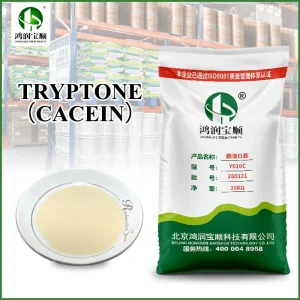
 Hongrun Baoshun