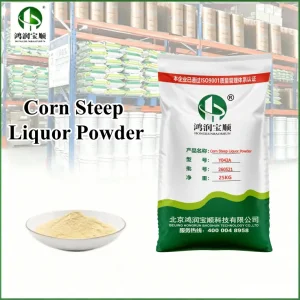
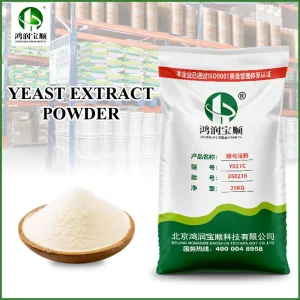
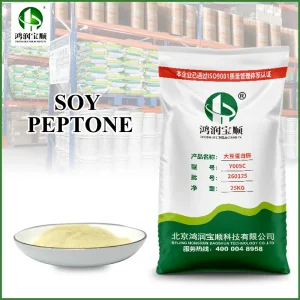
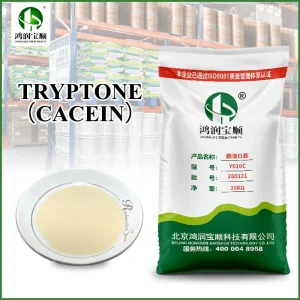
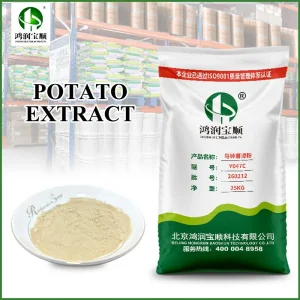
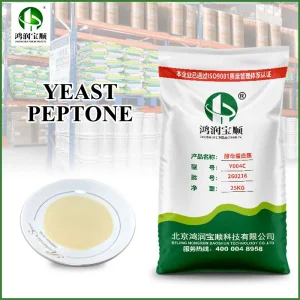
Direct supply from state-of-the-art facilities for pharmaceutical, biotech, and industrial cultivation media
Beijing Hongrun Baoshun Technology Co., Ltd. — Setting Standards in Fermentation Media Production Since 2008
Established in 2008 in the prestigious China (Beijing) Pilot Free Trade Zone Science and Technology Innovation Area, Beijing Hongrun Baoshun Technology Co., Ltd. has developed into an industry-leading modern high-tech enterprise. Our company integrates research and development, manufacturing, and international trade of biochemical nutrients. Recognized as a national "High-tech Enterprise" and a "Zhongguancun High-tech Enterprise," we serve as a major global supplier of high-quality organic nitrogen sources.
To support global supply chains, we scaled our manufacturing footprint in 2018 with a massive expansion in the Qili Industrial Park in Langzhong, Sichuan. The combined Sichuan phase I and II industrial plants span over 40,000 square meters. Operating independent animal- and plant-derived production lines, we guarantee cross-contamination-free production, which is essential for vegan, Halal, and Kosher regulatory compliance. This design meets the stringent requirements of modern industrial biotechnology, food systems, and pharmaceutical R&D.
The collaborative strength of our organization is driven by five specialized subsidiaries: Beijing Yaoyou Technology, Sichuan Baoshun Biotechnology, Sichuan Romgee Biotechnology, Sichuan Yingwen Technology, and Sichuan Runxiaobao Technology. This integrated business model guarantees full supply chain security, from raw materials sourcing to high-purity product delivery.
Advanced Enzymatic Hydrolysis, Consistent Quality Profiles, and Competitive Value
Unlike standard soybean meal, which contains raw macromolecules, our specialized hydrolysis processes convert complex proteins into highly soluble, bioactive peptides and free amino acids, assuring predictable growth rates in industrial fermenters.
We maintain strict physical separation between animal and plant production facilities. This design eliminates any risk of BSE/TSE contamination and complies with Kosher, Halal (MUI certified), and vegan standards.
Adhering to the standard of "zero substandard products leave the factory," our modern QC laboratory analyzes chemical compositions, molecular weight distributions, solubility, and heavy metals content before shipping.
Raw soybean meal contains anti-nutritional factors like trypsin inhibitors and phytates, which can hinder microbial metabolism. Our China-based processing facilities utilize specialized multi-enzyme cocktails to break down these macromolecules under precise temperature and pH controls. By optimizing the hydrolysis process, we achieve custom-tailored molecular weight distributions (MWD), ensuring high bioavailability for various fermentation profiles. The result is a highly soluble soy peptone rich in vitamins, carbon resources, and critical nitrogen fractions (amino nitrogen/total nitrogen ratio > 35%).
How advanced manufacturing improves performance in industrial microbiology
| Analytical Parameter | Raw Industrial Soybean Meal | Our Premium Soy Peptone (Plant-Derived) | Impact on Microorganisms Growth |
|---|---|---|---|
| Solubility in Water (2% Solution) | Insoluble / Suspended solids | 100% Fully Soluble, Clear Solution | Reduces downstream filtration costs and sensor fouling |
| Total Nitrogen (TN) | ~6.5% - 7.5% | ≥ 11.5% | High concentration of active nitrogen for fast biomass doubling |
| Free Amino Nitrogen (AN) | Minimal (< 0.5%) | ≥ 2.5% - 3.8% | Directly assimilable nitrogen for primary cell metabolism |
| Anti-Nutritional Factors | High (Trypsin Inhibitors, Lectins) | Completely Deactivated / Eliminated | Eliminates lag phase and improves growth yields |
| BSE / Animal Risk | None (Plant-based) | None (Plant-based, 100% certified) | Complies with global biopharmaceutical safety guidelines |
Optimizing plant nitrogen sources to meet global regulatory demand
Driven by safety regulations and ethical considerations, modern pharmaceutical and biological production is shifting away from bovine-derived raw materials (like brain heart infusion or gelatin peptone) toward plant-derived alternatives. Our Soy Peptone serves as a direct replacement. It provides the necessary amino acids, vitamins, and carbohydrates required for cultivating diverse micro-organisms, including *Lactobacillus*, *Escherichia coli*, *Bacillus subtilis*, and recombinant yeast strains, without animal-origin risks.
For scale-up industries like probiotics manufacturing and organic agriculture, raw materials must balance high performance with cost stability. We offer tailored organic nitrogen sources that support target cell densities and maintain cell viability through drying stages. In eco-friendly agriculture, our plant peptones and corn steep liquor powder help optimize the production of bio-fertilizers and bio-pesticides (*Bacillus thuringiensis*, *Trichoderma* spp.), promoting sustainable crop growth worldwide.
Every microbial strain has unique nutritional preferences. Leveraging our plant and animal production lines, we collaborate with R&D teams to customize variables like hydrolysis levels, salt profiles, and particle sizes. This tailored approach helps optimize target product yields, whether producing therapeutic proteins, industrial enzymes, organic acids, or secondary metabolites.
We provide comprehensive support for your fermentation raw material needs. Our customized services cater to diverse industries and specialized applications, backed by technical support and free product samples.
Explore our complete range of high-performance nitrogen sources for industrial applications
From microbiology labs to large-scale bio-reactors
Our raw materials find applications across diverse sectors, including microbiology, pharmaceuticals, and agriculture:
Insights from our R&D specialists and quality assurance department
Raw soybean meal consists of complex proteins that are mostly insoluble, making them difficult for many microbial strains to metabolize directly. It also contains anti-nutritional factors like trypsin inhibitors. Soy peptone, however, undergoes enzymatic hydrolysis to break down these complex proteins into soluble peptides and free amino acids, offering improved bioavailability and consistent performance in industrial fermentation.
At our Sichuan production base, we operate physically separated manufacturing lines for animal-derived and plant-derived products. Each line has its own dedicated raw material processing, enzyme systems, spray-drying equipment, and packaging systems. This setup prevents cross-contamination, supporting compliance with Halal, Kosher, and vegan certifications.
Our manufacturing facilities operate under a strict quality management system, certified to ISO 9001:2015 standards. Furthermore, our products have received MUI Halal certification, allowing them to be utilized in global markets with strict regulatory and cultural requirements.
Yes. Our R&D team can customize hydrolysis conditions to achieve specific molecular weight distributions (MWD). Whether your microbial strain requires short-chain peptides for immediate uptake or longer-chain peptides for sustained release, we can adjust our production parameters to match your requirements.
Our Sichuan production base features a factory footprint exceeding 40,000 square meters, complemented by over 20,000 square meters of storage area. This extensive infrastructure allows us to maintain consistent inventory levels and support stable, long-term supply arrangements for global biotech buyers.
Yes, we provide free product samples up to 500g for evaluation and testing. Please note that shipping fees are not included. You can contact our sales department to request the appropriate grade for your application.
We analyze raw materials prior to production. Our quality control laboratory monitors key metrics throughout the manufacturing process, verifying critical parameters such as total nitrogen, amino nitrogen, moisture, ash content, and microbiological purity before any batch is approved for shipment.
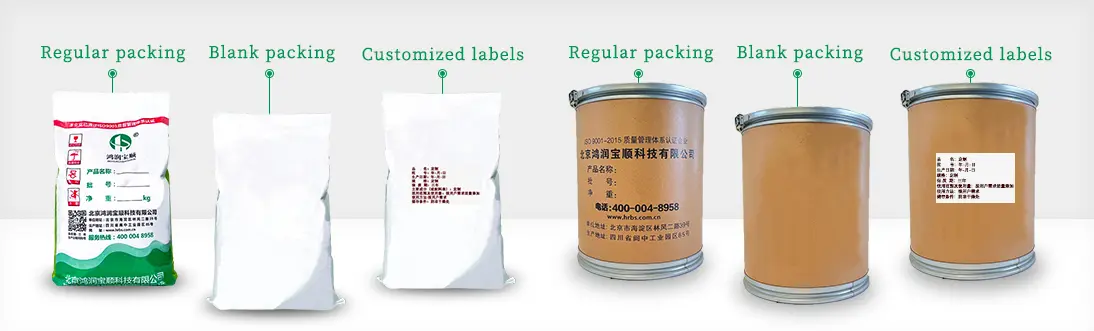
Our standard packaging is 25 kg bags or drums, lined with moisture-resistant polyethylene liners. For larger industrial shipments, we can arrange custom bulk packaging configurations to fit your facility's material handling setup.
 Hongrun Baoshun