Explore our foundational range of peptones, powders, and extracts designed to maximize microbial biomass and pathway yield during cellular respiration and fermentation.
A Globally Recognized Vanguard in Microbial Culture and Fermentation Substrates since 2008.
Established in 2008, Beijing Hongrun Baoshun Technology Co., Ltd. has established deep roots in the prestigious China (Beijing) Pilot Free Trade Zone Science and Technology Innovation Area. Integrating modern research, development, state-of-the-art production, and international trade, the enterprise is recognized as a national "High-tech Enterprise" and a "Zhongguancun High-tech Enterprise."
To support massive global biotech scales, we upgraded our strategic layout in 2018. Expanding our production footprint to the Qili Industrial Park in Langzhong, Sichuan, our manufacturing hub (Phase I & Phase II) spans over 40,000 square meters, supported by a 20,000 square meters dedicated temperature-regulated storage facility. Operating with over 100 highly skilled bioprocess specialists, our plant utilizes fully segregated, independent production lines for animal-derived and plant-derived products, preventing cross-contamination and ensuring complete compliance with global biopharmaceutical directives.

An In-depth Scientific Analysis of Metabolic Mechanisms and Nutritional Optimization in Industrial Bioreactors.
In modern industrial biotechnology, maximizing microbial growth kinetics and target metabolite production requires a precise understanding of the metabolic machinery of the host organisms. Microorganisms generate energy, building blocks, and valuable end-products by manipulating biochemical pathways. These pathways can broadly be categorized into cellular respiration (aerobic and anaerobic respiration) and fermentation. The choice of raw materials, specifically organic nitrogen sources, directly affects how these pathways operate, influencing cell density, viability, and protein expression.
Aerobic cellular respiration is the most thermodynamically efficient pathway for generating cellular energy in the form of Adenosine Triphosphate (ATP). Under oxygen-sufficient conditions, aerobic organisms utilize glycolysis to break down glucose into pyruvate, yielding ATP and NADH. Pyruvate is subsequently transported into the mitochondria (in eukaryotes) or remains in the cytoplasm (in prokaryotes) to be converted into Acetyl-CoA. This intermediate enters the Tricarboxylic Acid (TCA) Cycle (also known as the Krebs cycle), producing Carbon Dioxide, ATP, NADH, and FADH₂.
The final phase is the Electron Transport Chain (ETC) and Oxidative Phosphorylation, where electrons from NADH and FADH₂ are transferred through a series of membrane-bound complexes to oxygen, the terminal electron acceptor. This process establishes a proton motive force across the membrane, driving ATP synthesis. This pathway yields up to 36–38 ATP per glucose molecule. To sustain this intensive metabolic rate, organisms require a highly bioavailable supply of organic nitrogen, trace metals (like iron, magnesium, and copper, which are essential cofactors for cytochromes and iron-sulfur clusters in the ETC), and B-complex vitamins. Beijing Hongrun Baoshun's premium Yeast Extract Powders and Beef Peptones provide these essential micro-nutrients, ensuring stable respiration rates and preventing premature cell death in high-density cultures.
When terminal electron acceptors (like oxygen) are absent, or when certain Crabtree-positive yeasts (such as Saccharomyces cerevisiae) undergo overflow metabolism in high-sugar environments, cells switch to fermentation. In fermentation, glucose is metabolized via glycolysis to produce ATP and NADH. However, since the ETC cannot function without a terminal electron acceptor, the cell must regenerate NAD+ from NADH to keep glycolysis running. This is achieved by donating electrons from NADH to organic intermediates (typically pyruvate or its derivatives), resulting in the formation of fermentation end-products such as lactic acid, ethanol, or mixed acids.
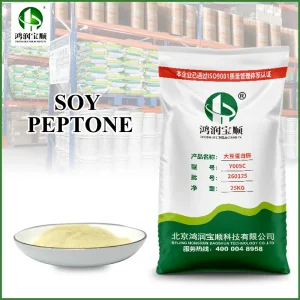
Fermentation is energetically less efficient than respiration, yielding only 2 ATP per glucose molecule. This lower yield means microbes must process substrates rapidly to sustain growth, increasing the demand for pre-digested nutrients. Using raw, complex proteins like soy meal can slow this process because the organisms must expend energy to break down the proteins. Beijing Hongrun Baoshun solves this challenge with enzymatically hydrolyzed nitrogen sources, such as Soy Peptone and Tryptone. These products deliver free amino acids and small peptides directly to the cells, saving metabolic energy and accelerating growth and productivity.
Nitrogen source quality is defined by more than just raw protein content; bioavailability and molecular weight distribution are equally critical. Inorganic nitrogen sources, such as ammonium sulfate, require organisms to synthesize all 20 amino acids from scratch, consuming significant amounts of ATP and reducing target metabolite yield. Organic nitrogen sources, like peptones, bypass this biosynthetic bottleneck.
Beijing Hongrun Baoshun designs peptones with tailored peptide profiles. Short-chain di- and tri-peptides are absorbed through specialized transport systems, supporting rapid initial growth. Medium-chain peptides act as sustained-release nutrient pools, maintaining cell viability during the stationary phase. In addition, yeast extracts supply essential nucleotides, vitamins (such as biotin, thiamine, and riboflavin), and trace minerals, supporting cellular health and protecting cells from osmotic stress in high-density bioreactors.
How Beijing Hongrun Baoshun and its 5 specialized subsidiaries ensure quality, scale, and compliance.
Focuses on high-end biotech R&D, precision peptide mapping, and metabolic flux analysis for customized media formulations.
Operates our primary production hub in Sichuan, specializing in large-scale animal-derived enzymatic hydrolysis and separation processes.
Manages strict biosafety protocols, international compliance documentation, and animal-free (AOF) raw material certification.
Oversees quality control platforms, batch validation, traceability systems, and implementation of GMP-standard procedures.
Manages our global logistics networks, temperature-controlled shipping lanes, and international customer service centers.
Tailored nitrogen-rich formulas optimized to meet the stringent demands of global biological industries.
Our peptones and yeast extracts form the foundation of dehydrated and plated culture media. High stability and batch-to-batch consistency ensure reliable diagnostic and research performance.
We supply high-purity beef and casein peptones to support the synthesis of recombinant proteins, monoclonal antibodies, and vaccines in GMP-regulated industrial bioprocessing environments.
Our raw materials support industrial-scale production of primary and secondary metabolites, including amino acids, organic acids, enzymes, and biopolymers, by optimizing microbial pathways.
We provide specialized nitrogen sources that support the growth of sensitive beneficial strains like Lactobacillus and Bifidobacterium, ensuring high viability and stability in finished products.
Our cost-effective organic nitrogen sources support the cultivation of plant growth-promoting rhizobacteria (PGPR) and biocontrol agents, helping to advance sustainable farming practices.
Our hydrolyzed plant proteins and fermented soybean meals deliver highly bioavailable peptides that improve growth rates, gut health, and feed conversion ratios in fish, shrimp, and livestock.
We provide nutrients designed to boost the metabolic activity of microbial consortia used in municipal and industrial wastewater treatment, accelerating the breakdown of complex organic pollutants.
Our grain and potato-based extracts supply the precise ratio of carbohydrates and trace elements needed for rapid mycelial development in high-yield mushroom cultivation.

State-of-the-Art Operations Delivering Consistent Quality, Traceability, and Global Security.
Industrial bioprocessing demands strict batch-to-batch consistency. A slight change in a nitrogen source's peptide profile can disrupt cellular pathways, leading to poor yields or failed runs. Beijing Hongrun Baoshun addresses this challenge by applying advanced manufacturing standards (Factory 4.0) at our production facility in Langzhong, Sichuan.
Our operations feature separate plant-derived and animal-derived production lines, eliminating the risk of cross-contamination. Automated enzymatic reactors monitor pH, temperature, and hydrolysis time in real time, ensuring a consistent molecular weight distribution for every batch. The facility operates under ISO 9001:2015 quality management standards and maintains MUI Halal compliance, meeting the technical and regulatory requirements of the global market.
With 20,000 square meters of storage space and raw materials sourced through integrated supply networks, we maintain a stable product supply. This security helps protect our global partners from market volatility and shipping delays, ensuring reliable delivery timelines year-round.
Leading the next generation of bioprocessing nutrients with animal-free formulations and precision peptones.
As the biotechnology sector evolves toward synthetic biology and cell culture platforms, the demand for highly defined, animal-free (AOF) nutrients is growing. Beijing Hongrun Baoshun is addressing this shift through a clear technical roadmap focused on sustainability and performance:
Tailored nitrogen-to-carbon profiles and peptide balances optimized for your specific cell lines.
Get technical support throughout your project, including formulation design, optimization, scale-up assistance, and troubleshooting.
We develop custom raw materials tailored to your specific process parameters, packaging needs, and target yield requirements.
Our quality control processes ensure clean, reliable peptones and extracts with minimal batch-to-batch variability.
We coordinate global logistics and regional warehousing to keep your production runs on schedule and minimize lead times.
We offer pricing tiers that support both early-stage research pilots and full-scale industrial manufacturing campaigns.
Our international support team provides clear, direct communication to guide you through technical specifications, compliance paperwork, and export logistics.
Verify our raw materials in your own laboratories. We provide free development samples (excluding shipping fees) to help you test and qualify our products.
Key technical insights on organic nitrogen sources, metabolic applications, and quality standards.
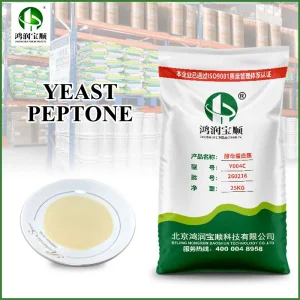
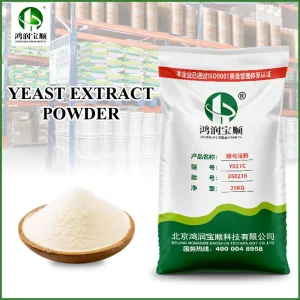
Yeast Extract is produced by autolysing yeast cells, yielding a product rich in B-complex vitamins, nucleotides, growth factors, and highly soluble free amino acids. It is ideal for stimulating initial cell growth and supporting fastidious microorganisms.
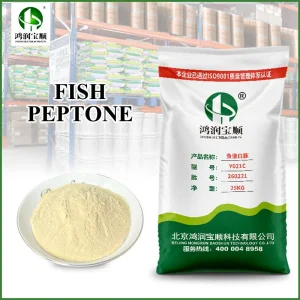
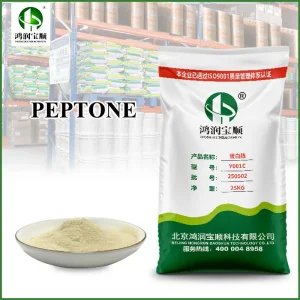
Peptone is made through the enzymatic digestion of proteins (such as soy, gelatin, casein, or meat). It contains a wider mix of larger peptides, polypeptides, and amino acids. These larger molecules act as a sustained-release nitrogen source, helping to maintain cell viability during longer fermentation runs.
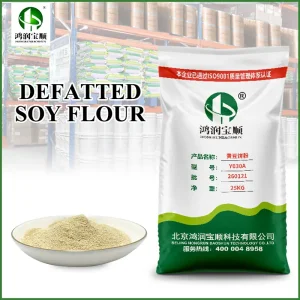
Plant-based peptones, such as Soy Peptone, are rich in carbohydrates and minerals like potassium and magnesium, which support glycolysis and respiratory pathway enzyme functions. They offer a reliable animal-free alternative for cell growth.
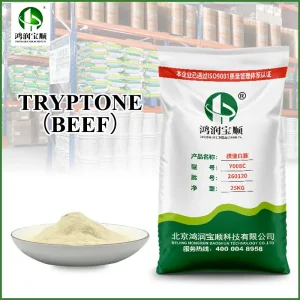
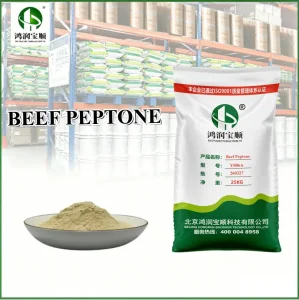
Animal-derived peptones, like Beef Peptone, provide a broader profile of essential amino acids and lipids, which can help increase biomass and stabilize membrane integrity in certain high-density cultures. The choice between them depends on your regulatory guidelines and the specific metabolic needs of your strain.
Microorganisms are highly sensitive to changes in their growth medium. Variations in peptide molecular weights or trace minerals can alter cell growth, shift metabolic pathways, and lead to inconsistent protein expression or metabolite yields.
Beijing Hongrun Baoshun controls batch-to-batch consistency by using automated enzymatic hydrolysis, standardized raw materials, and strict QC testing for total nitrogen, amino nitrogen, and salt levels.
Yes. We hold both ISO 9001:2015 quality management certification and MUI Halal certification. Our production facilities maintain separate plant-derived lines to meet strict religious, cultural, and pharmaceutical standards worldwide.
For standard stocked products, shipment occurs within 3 to 7 working days. Custom formulations—which require adjustments to hydrolysis rates, salt content, or custom milling—typically take 3 to 6 weeks, depending on the scale and specific parameters requested. Contact our technical team to discuss your project details.
Explore our high-yield bulk selections for large-scale bioreactor operations, clinical diagnostic media, and probiotic expansion.
 Hongrun Baoshun