Cacao bean fermentation is a complex, wild spontaneous process occurring immediately post-harvest in equatorial regions. It dictates the generation of flavor precursors—specifically free amino acids, short-chain peptides, and reducing sugars—which are crucial for the development of the characteristic chocolate aroma during roasting. The succession of wild microbes is highly variable, consisting of three main phases: anaerobic yeast fermentation, microaerophilic Lactic Acid Bacteria (LAB) fermentation, and aerobic Acetic Acid Bacteria (AAB) oxidation.
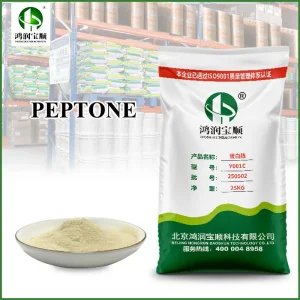
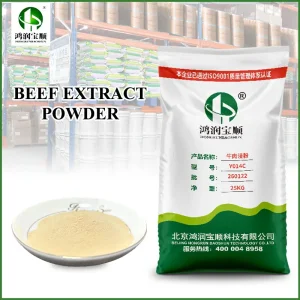
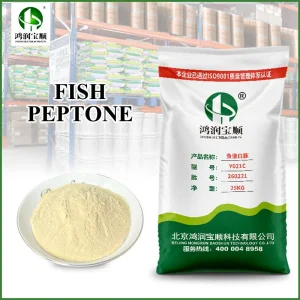
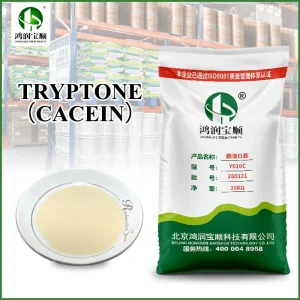
Modern industrial chocolate manufacturers and starter culture suppliers are shifting away from wild, uncontrolled fermentations toward inoculation with defined starter cultures. To mass-produce stable, high-viability starter cultures of Saccharomyces cerevisiae, Lacticaseibacillus fermentum, and Acetobacter pasteurianus, specialized high-purity organic nitrogen sources are required. As an established global biotechnology supplier, Beijing Hongrun Baoshun Technology Co., Ltd. provides the critical peptide and amino acid backbones needed to support optimization pathways in industrial microbial propagation.
Understanding the nutrition inputs of starter media directly correlates to high biomass yields and structural integrity of preserved cultures. Inadequate nitrogen nutrition leads to sluggish fermentations, higher volatile acidity variations, and poor survival rates during lyophilization (freeze-drying).
Established in 2008 and rooted in the Science and Technology Innovation Area of the China (Beijing) Pilot Free Trade Zone, Beijing Hongrun Baoshun Technology Co., Ltd. has developed into a preeminent, modern high-tech enterprise. Integrating state-of-the-art research and development with large-scale industrial manufacturing, we have attained dual certifications as a National "High-tech Enterprise" and a "Zhongguancun High-tech Enterprise."
Our production facilities in the Qili Industrial Park of Langzhong, Sichuan, operate completely segregated animal-sourced and plant-sourced processing lines. This guarantees absolute compliance with dietary restrictions and avoids cross-contamination.
Five specialized subsidiaries—Beijing Yaoyou Technology, Sichuan Baoshun Biotechnology, Sichuan Romgee Biotechnology, Sichuan Yingwen Technology, and Sichuan Runxiaobao Technology—work in absolute unison to manage research, raw material sourcing, and supply logistics.
Certified under ISO 9001:2015 and MUI Halal, we operate under a strict baseline of "zero substandard batches leaving the factory." Every batch of peptone, tryptone, and yeast extract undergoes strict HPLC profile analysis.
The global chocolate and functional confectionery industries are witnessing a shift. Raw cacao processors are moving away from traditional heap or box fermentation methods toward controlled bioreactor configurations at centralized collection centers. This shift demands standardized bio-inoculants on a massive scale. Consequently, procurement officers face challenges regarding consistency, safety, and supply security of fermentation nutrients.
Inconsistent wild fermentation speeds allow mold growth (e.g., Aspergillus carbonarius), resulting in Ochratoxin A contamination. Rapid starter culture propagation facilitated by premium organic nitrogen sources ensures immediate microbial dominance, dropping the pH quickly to inhibit mold growth.
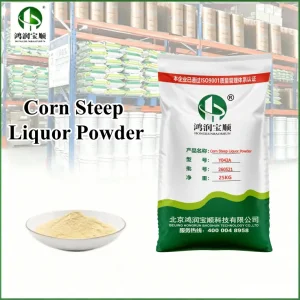
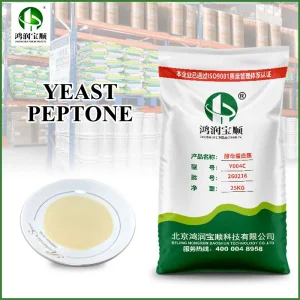
Chocolate is a global commodity demanding Kosher and Halal compliance. Procurement teams must source yeast peptones and plant extracts (like corn steep liquor or wheat peptones) that carry strict animal-free traceability documentation to satisfy certification bodies.
Microbial media must remain consistent between batches. Industrial yeast and bacteria cultivators require raw materials with tight ranges of total nitrogen, amino nitrogen, moisture, and ash. Beijing Hongrun Baoshun's advanced drying systems provide this consistency.
Microorganisms require specific carbon, nitrogen, and trace mineral arrays to synthesize enzymes and survive preservation processes. Below is our technological approach for aligning industrial biological fermentation raw materials with the metabolic requirements of cacao starter cultures.
We understand that each cacao post-harvest processing setup has unique requirements. A startup in Ecuador targeting floral and fruity notes needs a different inoculation profile than a West African bulk exporter prioritizing bitterness reduction and chocolate-note standardization.
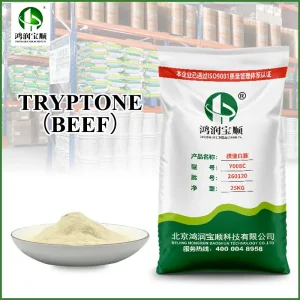
To support this, we offer tailored molecular weight peptide profiles. Through controlled enzymatic hydrolysis using pancreatin, pepsin, and papain, we can adjust the ratio of free amino acids to oligopeptides in our customized peptones. This ensures precise, bio-available nutrition for your starter strains.
Microbial cultures used in cacao bean processing are typically produced in liquid bioreactors, harvested by centrifugation, and preserved via freeze-drying or spray-drying. The survival of these delicate bacteria and yeasts depends on their growth medium.
By using peptones with high concentrations of protective amino acids and complex peptides, we help microbes build strong cell walls. This protects the cells during lyophilization and results in higher active cell counts per gram of starter powder. This allows processors to use smaller doses while achieving consistent results in the field.
The future of cacao processing lies in synthetic biology and precision fermentation. Industrial laboratories are developing genetically optimized strains of yeast and bacteria designed to produce specific aroma profiles, such as enhanced fruity esters or reduced astringent polyphenols.
By controlling the amino acid feed in starter cultures, manufacturers can target specific flavor outcomes. For example, supplying leucine-rich peptones encourages yeasts to produce isoamyl acetate, adding desirable banana and fruity notes to the cocoa profile.
Properly nourished starter cultures can reduce fermentation times from 6–7 days down to 4 days, without sacrificing flavor quality. This increases processing capacity and throughput for centralized cocoa estates.
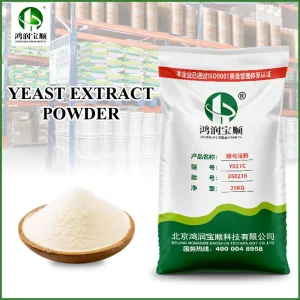
High-temperature and high-acid conditions can stress starter microbes during cacao fermentation. Sourcing yeast extracts with high levels of protective trehalose and proline helps cultures perform reliably under harsh field conditions.
While inorganic nitrogen sources (like ammonium sulfate) can support basic yeast growth, they do not provide the complex peptides, trace minerals, and vitamins required by fastidious Lactic Acid Bacteria (LAB) and Acetic Acid Bacteria (AAB). Organic nitrogen sources, such as peptones and yeast extracts, provide pre-formed amino acids and vitamins (especially B-complex) that reduce the metabolic energy needed for cell division. This results in higher biomass yields and healthier cells that are better suited for preservation processes.
Our manufacturing base in Langzhong, Sichuan features completely independent production lines for animal and plant materials. Each line utilizes dedicated raw material storage, extraction systems, spray dryers, and packaging lines. This structural separation prevents cross-contamination and ensures compliance with vegan, vegetarian, Halal, and Kosher requirements.
Yes. We offer customization of peptone products to target specific peptide molecular weight distributions. Using advanced enzymatic hydrolysis and ultrafiltration systems, we can tailor media ingredients to favor short-chain peptides or free amino acids, depending on the metabolic requirements of your target microorganisms.
Our production facilities operate under ISO 9001:2015 quality management systems, and our products carry MUI Halal certifications. We perform strict quality control inspections on every batch, including assays for heavy metals, microbial limits, and amino nitrogen content, ensuring reliability in industrial food-grade processes.
We provide free samples up to 500g per product (excluding shipping costs) to support lab trials, validation testing, and pilot-scale fermentation optimization. This allows your R&D teams to verify the performance of our materials before purchasing in bulk.
 Hongrun Baoshun