Direct supply from state-of-the-art facilities prioritizing bio-availability and micro-ecological stability
A comprehensive whitepaper examining current trends, metabolic enhancements, and micro-ecological innovations
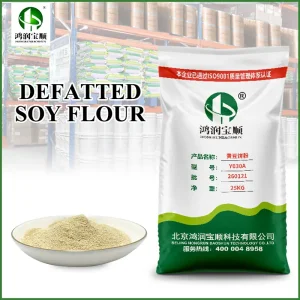
In the global animal husbandry and biotechnology industries, the role of soybean meal has transitioned from a basic agricultural commodity to a highly engineered biochemical feedstock. As the demand for intensive, sustainable livestock farming accelerates, traditional raw soybean meal is no longer sufficient to optimize feeding efficiency. Modern biotechnology utilizes microbial fermentation and enzymatic hydrolysis to transform raw soy protein into highly digestible peptides and free amino acids.
Raw soybeans possess severe anti-nutritional factors (ANFs), such as trypsin inhibitors, lectins, and phytic acid. These compounds impede digestive enzymogenesis within the monogastric gastrointestinal tract, leading to malabsorption, poor feed conversion ratios (FCR), and intestinal inflammation. By adopting precision bio-fermentation methods—utilizing specific strains like Bacillus subtilis, Lactobacillus acidophilus, and Saccharomyces cerevisiae—our factories systematically degrade these macromolecular proteins and eliminate ANFs, generating a nutrient-rich organic nitrogen source suited for both biological feeds and industrial culture media.
Global dynamics are shifting toward low-emission protein diets. Fermented plant-derived proteins, especially organic fermented soybean meal flour, serve as highly digestible alternatives to marine-sourced fishmeal, reducing dependence on wild-caught fisheries and lowering the carbon footprint of aquaculture and swine feed systems.
Through advanced microbial processing, macromolecular proteins are cleaved into peptides with molecular weights below 1,000 Daltons. The degradation of glycinin and beta-conglycinin minimizes intestinal hyper-sensitivity, boosting animal immunity and promoting intestinal mucosal development.
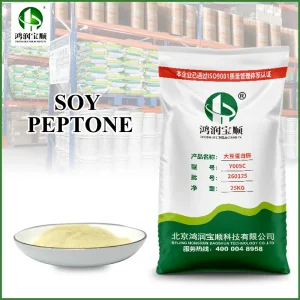
Highly purified soy peptones have expanded beyond animal feed into the pharmaceutical and biotechnology sectors. As a reliable, non-animal-derived organic nitrogen source, plant proteins support the cultivation of industrial probiotics, vaccine manufacturing, and recombinant protein production.
Established in 2008, Beijing Hongrun Baoshun Technology Co., Ltd. took root in the Science and Technology Innovation Area of the China (Beijing) Pilot Free Trade Zone. We have evolved into a modern high-tech enterprise integrating research and development, production, and sales. Recognizing our research capabilities, we stand out as a recipient of dual certifications as a national "High-tech Enterprise" and a "Zhongguancun High-tech Enterprise."
In 2018, we expanded our manufacturing capabilities by establishing a production base in the Qili Industrial Park in Langzhong, Sichuan. Spanning Phase I and Phase II factories, our site covers over 40,000 square meters of production space, complemented by a 20,000 square meters storage area.
Equipped with independent production lines for both animal-derived and plant-derived proteins, our facility outputs highly consistent batches of peptones, yeast extract powders, and fermented feed materials, meeting the demands of global supply chains.

Addressing the strict parameters needed for high-capacity aquaculture, piglet diets, and biotechnological culture media
| Evaluation Parameter | Standard Soybean Meal | Fermented Soybean Meal (Active Grade) | Plant-Derived Soy Peptone (Ultra-Pure) |
|---|---|---|---|
| Crude Protein Content | 43% - 48% | 50% - 55% | ≥ 78% (Total Nitrogen) |
| Trypsin Inhibitor Activity | 3.0 - 5.5 mg/g | < 0.5 mg/g | Undetectable |
| Peptide Molecular Weight | Macromolecular (>20,000 Da) | > 70% under 3,000 Da | > 90% under 1,000 Da |
| Acid-Soluble Protein Rate | < 5% | > 12% - 18% | > 95% |
| Primary Application | Bulk Herbivore Rations | Young Piglet & Aquaculture Starters | Microbial Fermentation / Biotech Labs |
For international buyers in regions like North America, Europe, and the Middle East, product quality metrics must align with strict biosafety guidelines. Standard soybean meal contains high fiber and antigenicity, rendering it unsuitable for early-stage animal feeding. Micro-ecological processing reduces soybean allergens such as glycinin and beta-conglycinin, converting raw proteins into bio-peptides that support immunoprotective responses in young livestock.
Synergizing plant-derived peptides and animal peptones to support global nutrition and biotechnology
By integrating fermented soy protein into starter feeds, manufacturers can mitigate weanling stress diarrhea and optimize intestinal microflora, enhancing overall feed intake and weight gain.
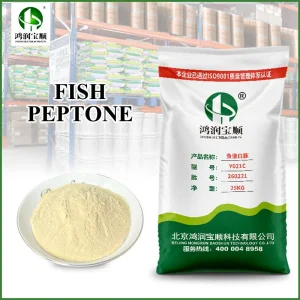
High-purity fish peptones combined with fermented plant proteins serve as balanced nitrogen sources for shrimp, salmon, and marine finfish, matching the amino acid profile of wild forage fish.
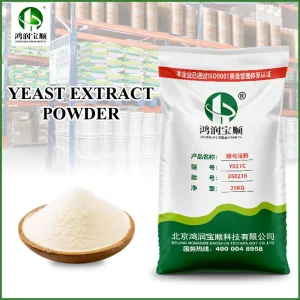
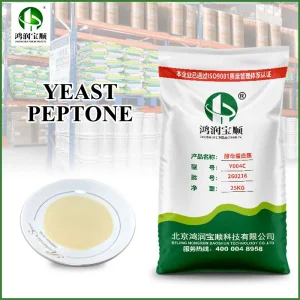
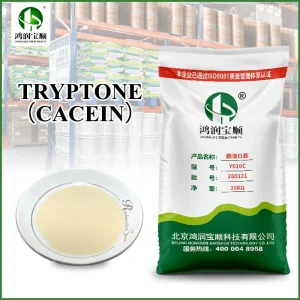
Providing high-purity peptone matrices (tryptone, soy peptone, yeast extracts) that serve as consistent culture media components for antibiotic discovery, vaccine production, and clinical diagnostics.
Applying hydrolyzed plant proteins and probiotics directly to soils stimulates natural bacterial defenses, increases crop yields, and improves nitrogen fixation efficiency.
Formulating optimal growth media with yeast extract paste and corn steep liquor powder allows industrial bioreactors to produce high concentrations of beneficial microbial cultures.
Providing custom physical properties (granular, powder, paste), packaging sizes, and enzyme digestibility configurations tailored to client specifications.

Beijing Hongrun Baoshun Technology Co., Ltd. operates in coordination with its five subsidiaries, creating an integrated production and supply ecosystem:
To support global supply chains, our operations have passed the ISO 9001:2015 Quality Management System Certification and the MUI Halal Certification. Our production processes adhere to a strict internal quality control standard: "No substandard products leave the factory." Every batch is verified for biological purity, moisture content, and nutritional density prior to dispatch.
The convergence of artificial intelligence, green chemistry, and precision biological fermentation
As we look toward 2030, our R&D efforts are focused on the integration of smart manufacturing systems and enzymic optimization models. By monitoring fermentation variables in real time (such as pH, dissolved oxygen, temperature, and peptide profiles), we ensure consistent, high-purity yields.
Our long-term development plans prioritize sustainable biotechnology. This includes transitioning our thermal systems to clean energy sources and implementing closed-loop water recovery circuits. Through collaborations with global academic institutions, we are designing targeted peptone configurations to support the cultivation of engineered microorganisms and mammalian cell cultures.
Expert answers to critical quality questions regarding fermented plant proteins and microbial culture media
Raw soybean meal contains significant concentrations of anti-nutritional factors (ANFs), such as soybean antigen proteins, phytic acid, lectins, and trypsin inhibitors. Fermentation utilizes microbial enzymes to break down raw proteins into easily absorbable peptides and amino acids, neutralizing these ANFs. This process increases the protein content and enhances overall digestibility, supporting intestinal health in young animals.
Yes. Our premium soy peptone is an enzymatically hydrolyzed plant protein that provides a rich organic nitrogen source. It serves as an alternative to animal-derived peptones, reducing regulatory hurdles associated with animal origin concerns. This makes it suitable for producing probiotics, vaccine raw materials, and organic agricultural formulations.
Our factories are certified under the ISO 9001:2015 Quality Management System and have secured MUI Halal Certification. We conform to international trace-metal, heavy-metal, and microbiological limits, ensuring compliance with importing standards in the Americas, the European Union, the Middle East, and Asia.
Yes. We support custom protein levels, peptide molecular weight targets, ash and moisture limits, physical form configurations (granular, powder, paste), and packaging sizes. Our dual-line system (dedicated plant and animal processing lines) ensures contamination-free custom production.
We provide free testing samples of up to 500 grams per product to qualified buyers (excluding shipping and customs clearance fees). This allows clients to verify batch consistency and chemical profiles in their facilities before placing bulk orders.
High-purity organic nitrogen sources designed for biological engineering and livestock feed applications
 Hongrun Baoshun